
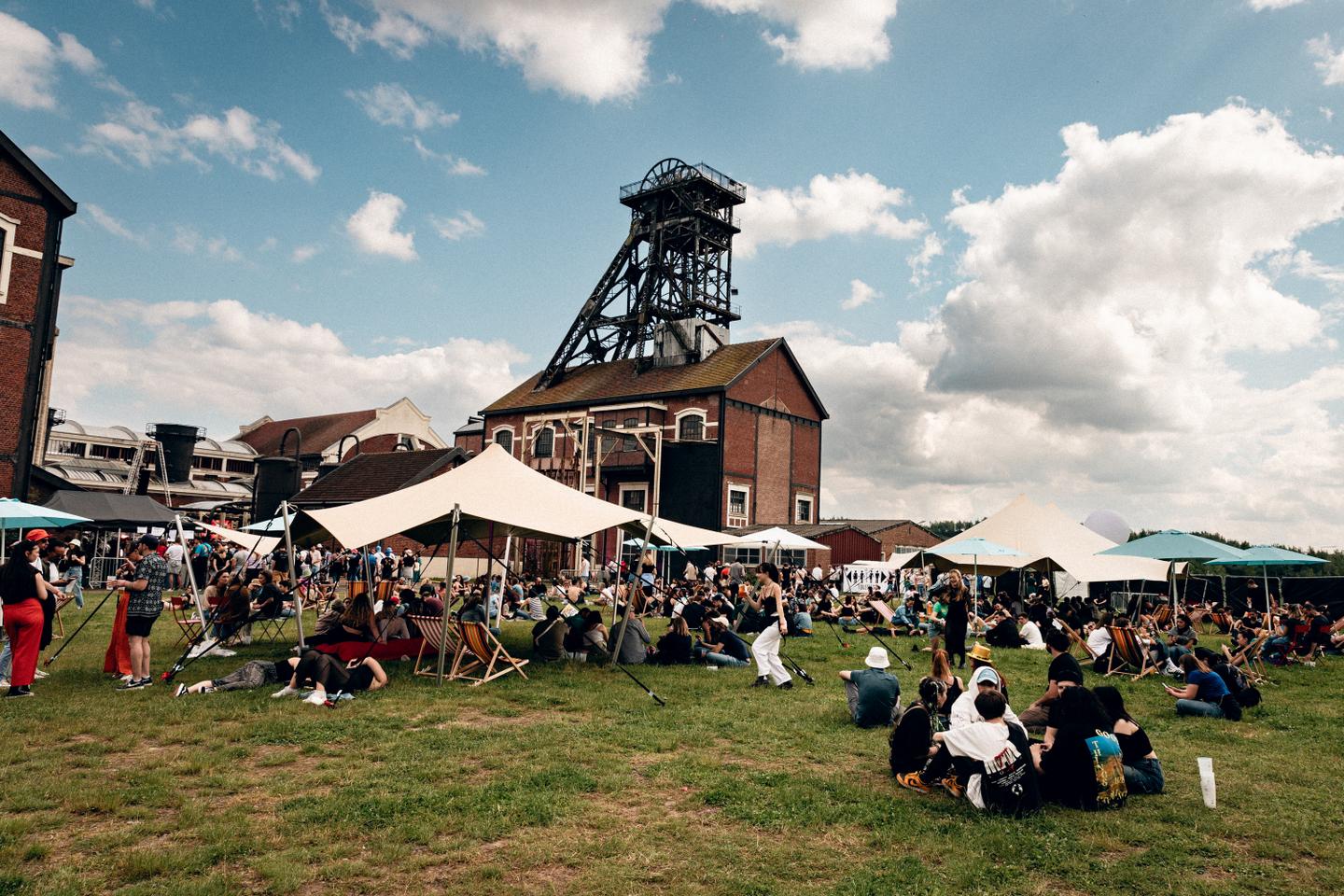
Located in the heart of Pas-de-Calais , the 9-9 bis mining site represents a significant piece of Europe’s industrial heritage. Operating from 1930 to 1990 , this site showcases a stunning trio-centric mining architecture that includes extraction pits and chivalments (the “elevators” used by miners to descend into and ascend from the mines). It was here that generations of miners worked tirelessly to extract coal, often in harsh conditions. This historical site not only includes remnants of coal extraction but also features the mining town built to accommodate the workers and their families, often referred to as the “black mouths”
Since its closure, the 9-9 bis site has evolved into a haven for industrial heritage enthusiasts . It notably hosted the last coal gaillette (or coal pit) operation in the Nord-Pas-de-Calais region in 1990 . Recently, on Saturday the 24th, the site hosted a techno festival that drew in a crowd of electronic music lovers. The Name Festival , which started two decades ago in Roubaix , has become a significant cultural event in the region, similar to other renowned festival traditions found in cities like Lyon and Marseille .
A Unique Industrial Atmosphere
For the 2024 edition, the Name Festival returned to the industrial charm of 9-9 bis . Fanny Bouyagui, the founding director of the event, remarked on the mesmerizing views : “The rising perspective offered by the chivalments, the machinery, and the terrils (the mining waste heaps) in the background… The site is breathtaking.” Bouyagui, who is also the director of the art point M association, which promotes underground cultures, had previously been unaware of the site’s existence. However, during a site visit earlier this year, she instantly recognized its potential for hosting vibrant music events.
The juxtaposition of the raw industrial landscape with the vibrant community atmosphere created during the festival provides a unique experience for attendees. The 9-9 bis mining site not only captures the essence of the region’s historical significance but also serves as a venue where culture and history intersect, allowing both locals and visitors to appreciate the rich heritage of Pas-de-Calais .
Resurgence of Interest in Industrial Heritage
Events like the Name Festival signify a growing trend of cultural engagement with industrial heritage sites. As societies increasingly recognize the importance of preservation , there are more initiatives aimed at celebrating the history and culture linked to industrial regions. Such festivals also attract diverse audiences, including not just music fans, but also those invested in exploring the stories and legacies of past generations.
By converting these historical spaces into venues for contemporary creativity, communities can foster a renewed sense of identity. The Name Festival stands as a testament to the transformative power of music and arts, as it breathes new life into former industrial sites while simultaneously preserving their historical legacy.
Conclusion on Cultural Transformation
As communities engage more with their industrial past, there is a promising future for heritage sites like 9-9 bis . The Name Festival reflects not just a celebration of music, but also an opportunity to appreciate the deep-rooted history intertwined with these sites. They serve to remind us of the resilience of communities and the importance of preserving history while embracing modern cultural expressions. This balanced approach not only honors the past but also paves the way for future generations to connect with their local heritage through the lens of contemporary creativity.