
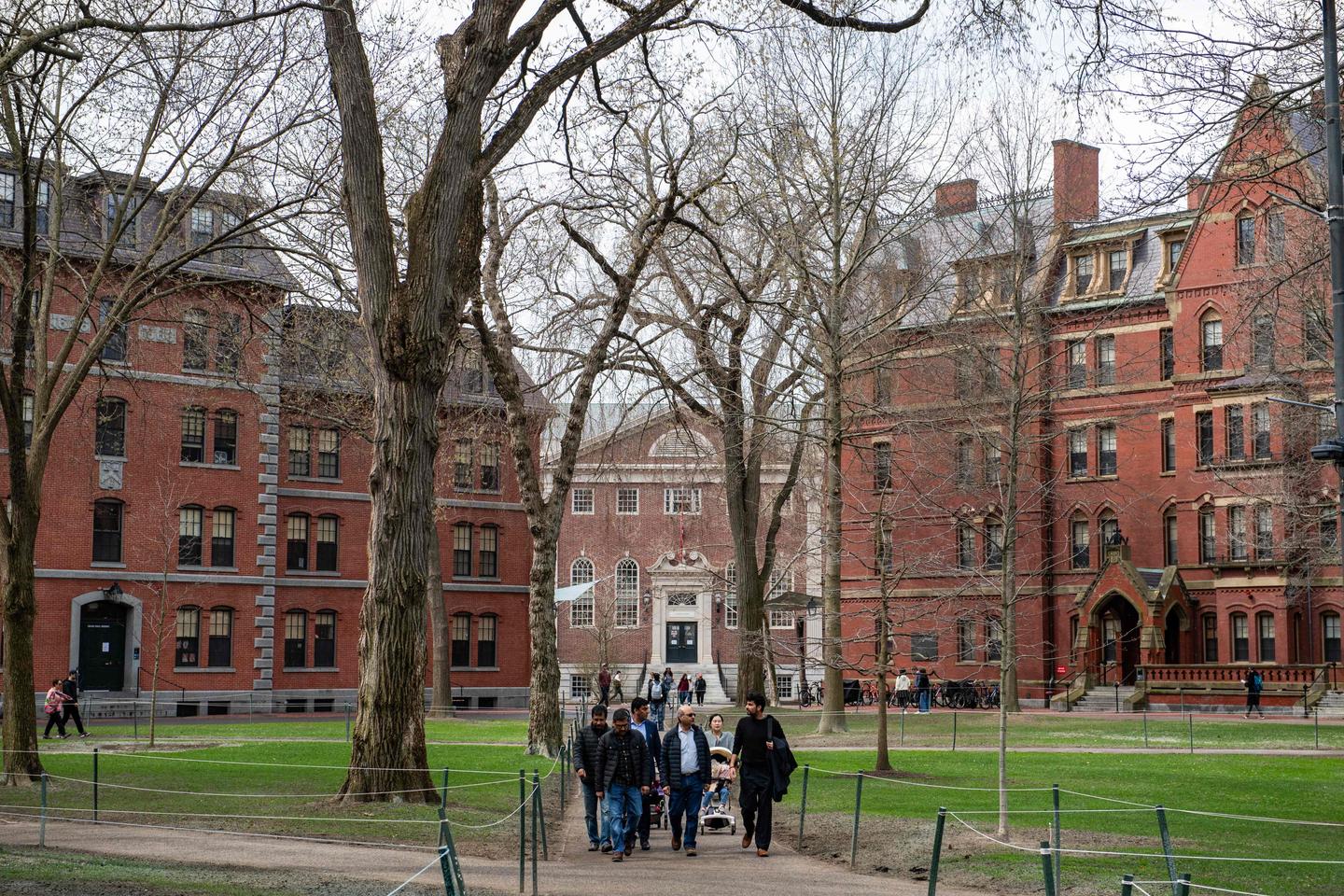
On Thursday, May 22, the Trump Administration made a shocking announcement detailing its decision to withdraw Harvard University’s right to accept foreign students. This action marks a significant escalation against a prestigious institution historically renowned for its academic excellence.
“The certification of the SEVIS (Student and Exchange Visitor) program is revoked with immediate effect,” announced Kristi Noem , the U.S. Secretary of Homeland Security, in a letter directed at the university. The SEVIS program is a crucial framework that allows foreign students to study in the United States.
The implications of this move are monumental. According to the statement from the Secretary, Harvard is now barred from enrolling students holding F or J visas for the academic year 2025-2026. This decision could result in substantial financial losses and reputation damage for Harvard, which is widely regarded as one of the world’s top universities and has produced 162 Nobel Prize winners.
The Department of Homeland Security claimed that Harvard perpetuated an unsafe campus environment, stating that the university provided a platform for “anti-American and pro-terrorist agitators” to target Jewish students. No concrete evidence was provided to support these claims, but the government also accused the institution of collaborating with the Chinese Communist Party .
Impact on the Student Body
“This means that Harvard can no longer register foreign students, and current foreign students must be transferred or lose their legal status,” noted the press release from the Department of Homeland Security. The Trump administration indicated that thousands of current students now face the dilemma of either transferring to different universities or leaving the U.S. altogether.
Secretary Noem emphasized that currently enrolled foreign students would be compelled to “ transfer ” to other institutions, lest they risk their visa status. This has already prompted individuals like Karl Molden , a 21-year-old Austrian student majoring in government and classical letters, to apply to Oxford University in Great Britain. “I loved my time at Harvard, and being accepted there was a significant honor,” Molden remarked, adding that “The U.S. is becoming significantly less appealing for higher education.”
Harvard is home to nearly 6,800 international students , which constitutes more than 25% of its total student body. These students come from over 100 countries , predominantly pursuing graduate-level degrees.
Harvard’s Response to the Decision
In a swift rebuttal to this unprecedented move, Harvard declared the decision illegal and stated its determination to preserve its ability to welcome international students and academics. A spokesperson for Harvard emphasized, “We are wholly committed to maintaining Harvard’s ability to host students from over 140 countries, enriching not only our university but also our nation as a whole.” This marks the latest step in Harvard’s ongoing legal battle against the government concerning federal funding withdrawals.
A Wider Assault on Higher Education
This decision against Harvard is part of a broader strategy by the Republican party , which has criticized many top American universities for allegedly endorsing left-leaning ideologies perceived as excessively progressive. Advocacy groups dedicated to freedom of speech argue that this constitutes an attack on free expression and an effort to silence dissenting views, particularly criticism of Israel .
In the public letter announcing the decision, Secretary Noem criticized Harvard for not sufficiently cooperating with the administration’s requests for information, stating that the university continues to foster a dangerous campus environment characterized by anti-Semitism and pro-Hamas sentiments, while employing policies of “ diversity, equity, and inclusion ” seen as discriminatory.
Supporters of diversity initiatives argue these policies are essential to rectify historical inequalities within American society, contrasting sharply with the criticism from government officials.
Faced with escalating tensions, the U.S. government has already rescinded over $2 billion in funding for Harvard, further straining the relationship between one of the most esteemed educational institutions and the federal government.
Amidst this upheaval, Alice Goyer , a fourth-year student at Harvard, expressed uncertainty: “Word has circulated about these developments, but no one really knows what it means for our international peers.” She characterized the mood on campus as one of panic, with many students hoping for a legal battle against this abrupt policy change.