
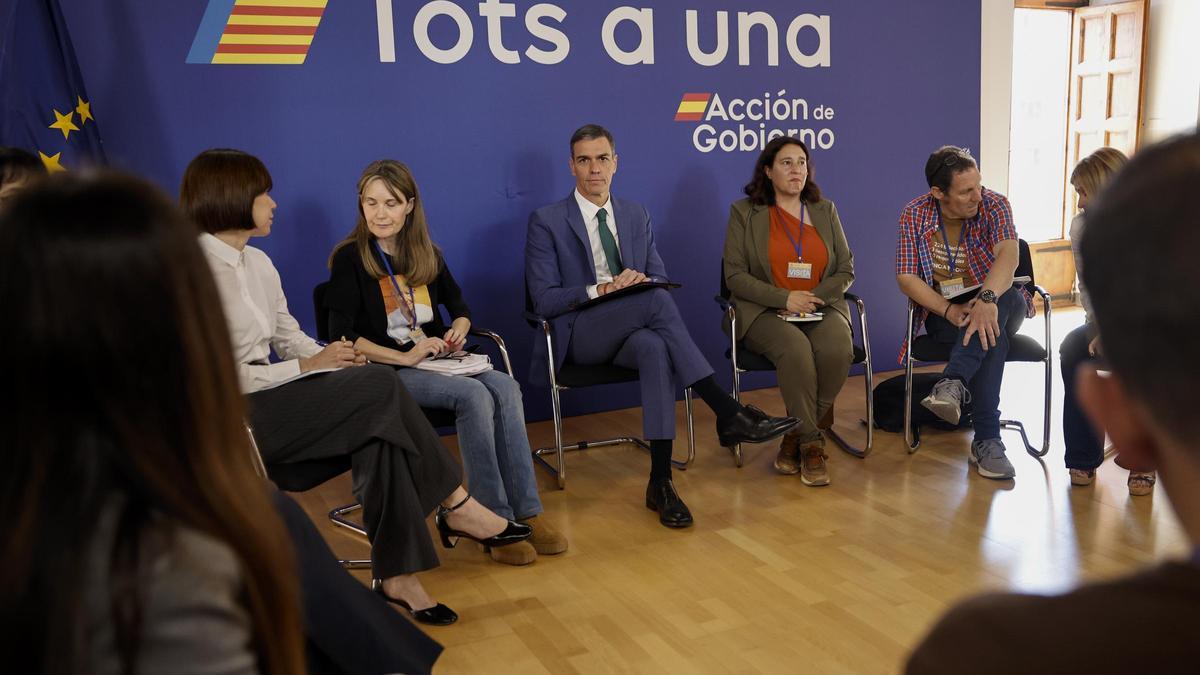
Meeting of the Government President with Victims’ Associations
On the morning of October 29, the President of the Government, Pedro Sánchez, convened a meeting at the Delegation of the Government in the Valencian Community. This gathering was crucial as it involved representatives from three different victims’ associations impacted by the devastating floods. These floods, which occurred nearly seven months ago, led to the tragic loss of 228 lives in the province of Valencia and left thousands of individuals and families affected.
Details of the Meeting
As of now, the details of the discussions taking place during the meeting have not been disclosed. The meeting commenced shortly after Pedro Sánchez arrived at the Delegation at 11:35 AM, starting ten minutes later with the presence of Diana Morant, the Minister of Science, Innovation, and Universities, along with Pilar Bernabé, the Government Delegate in the Valencian Community. The primary objective of this meeting is to address grievances and concerns from the victims’ associations which include the L’Horta Sud Victims Association, the 29-O Fatal Victims Association, and the 29 October Victims Association.
Context of the Tragedy
The floods that struck Valencia nearly seven months ago are still fresh in the memories of many. With substantial infrastructural damage and the emotional toll on families who lost loved ones, it remains a significant point of discussion in governmental spheres. The efforts made by local authorities and organizations to recover from this disaster reflect the resilience of the community. However, for many, the pain of losing family members continues, emphasizing the importance of this meeting.
Expected Outcomes
While it is anticipated that no official statements will be made by Pedro Sánchez following the conclusion of the meeting, government sources indicated that the intention is to give "full prominence" to the victims’ associations. This approach suggests a priority on listening to the affected parties rather than engaging in political rhetoric or announcements. Such a sentiment is generally well-received, as it shows a commitment to addressing the specific needs and concerns of the victims.
Historical Context and Previous Visits
This visit marks the fourth time Pedro Sánchez has been to Valencia in relation to the flood disaster. His prior engagements occurred on October 31, when he visited the Generalitat’s Emergency Center, on November 3 in Paiporta, and a meeting on January 23 in València where he met with mayors from affected areas. Additionally, earlier visits included recognition of the assistance provided by the military during the crisis.
These repeated visits underscore the government’s commitment to not only addressing immediate concerns but also working towards long-term solutions for the impacted regions.
Public Reaction Outside the Delegation
Outside the Delegation of the Government, there was a palpable tension, with a small group of individuals vocally expressing their discontent towards the president. Protesters chanted slogans such as "Pedro Sánchez to prison," reflecting a portion of the populace’s dissatisfaction with the government response to the flood disaster. In contrast, another group called for the resignation of Mazón, indicating a nuanced political landscape that involves various stakeholders.
This division among the public indicates that while some are focused on addressing the needs of the flood victims, others hold the government accountable for perceived failures in disaster management and response.
The Role of Victims’ Associations
The victims’ associations play a vital role in ensuring that the voices of those affected are heard. These groups serve not only as advocates but also as support networks for individuals navigating the aftermath of the disaster. Their participation in meetings such as the one with Pedro Sánchez is crucial as it helps to shed light on the ongoing struggles that many face.
By engaging directly with these associations, the government can better understand the specific needs of the victims, which might include financial assistance, emotional support, and community rebuilding efforts.
Government’s Responsibility and Future Steps
The responsibility lies heavily on government officials to ensure that promises made to victims translate into actionable plans. Recovery from such disasters often takes significant time, resources, and dedication. Furthermore, transparency during the recovery process fosters trust between the government and the communities affected.
As the discussions unfold, it remains important for the government to provide regular updates on the progress being made and to establish goal-oriented strategies that align with the needs of the victims.
In conclusion, the meeting held at the Delegation of the Government in Valencia represents a significant step towards addressing the ongoing challenges faced by flood victims. With the loss of life and considerable impact on the community, it is vital that representatives listen actively and respond thoughtfully as they work toward recovery and resilience in the Valencian Community.