
US-South Africa Relations: The Controversial Meeting
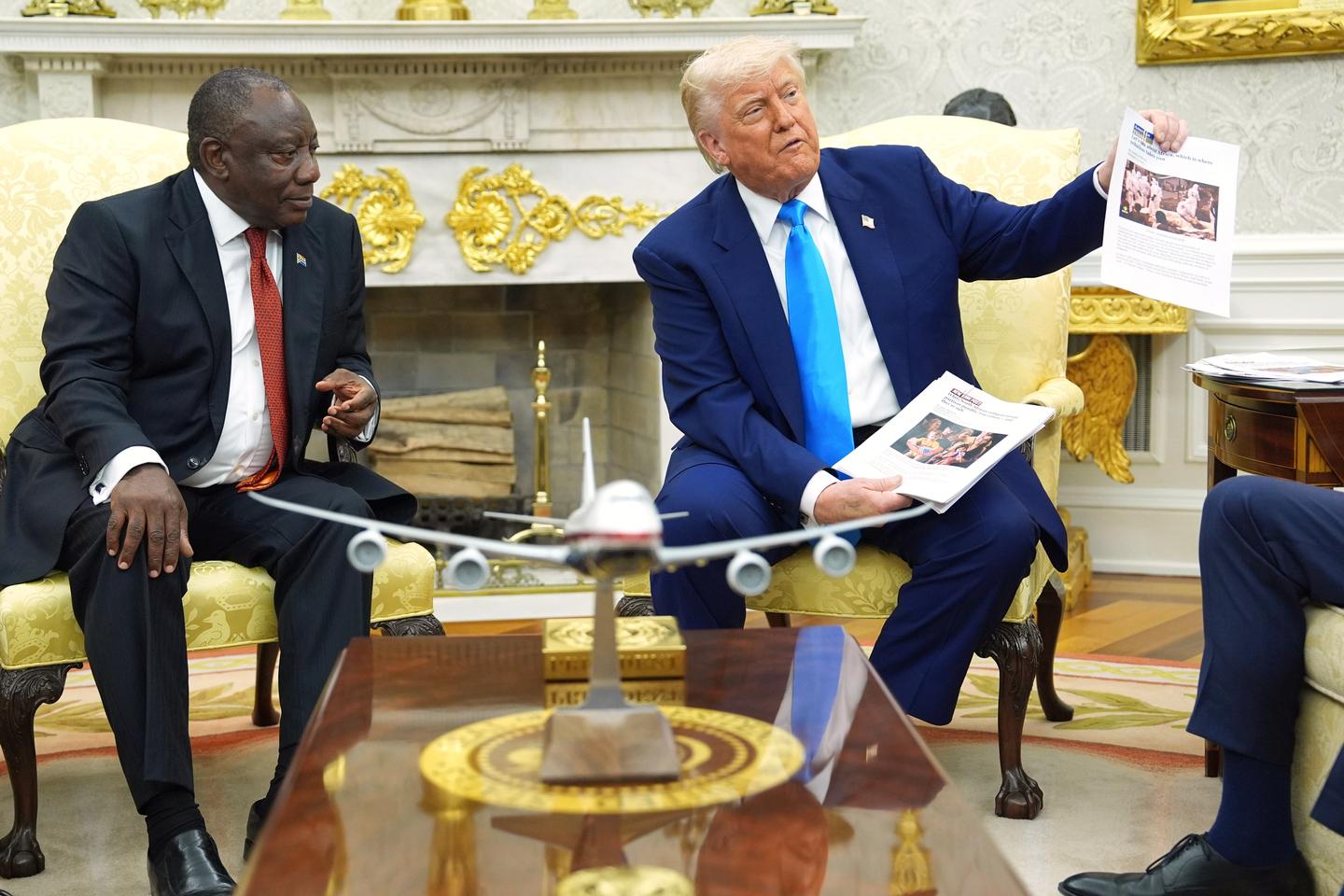
In a **controversial** encounter at the **White House**, US President **Donald Trump** met with South African President **Cyril Ramaphosa** on May 21, 2025. The meeting was heavily focused on the issue of white farmers in **South Africa**, amid allegations from Trump regarding their treatment in the country.
Trump’s Allegations
During the meeting, Trump presented **videos** purportedly showcasing the plight of **white farmers** in South Africa, claiming that they are being subjected to **violence** and **genocide**. “They are killed,” Trump remarked, as he highlighted the **disturbing** images of families fleeing their homes, attempting to escape what he described as a dire situation.
This narrative has received **significant attention** in the media and among political analysts. Many believe that Trump’s statements aim to garner **political support** from a particular base in the US, who may feel a kinship with these farmers due to shared racial and cultural identities.
Response from South Africa
President Ramaphosa strongly refuted Trump’s accusations during the meeting. He asserted that there are **no policies** in place that support the **expropriation** of white farmers without compensation, countering the claims made by Trump. Ramaphosa stated emphatically, “No, no, no, no, nobody can take land,” stressing the legal frameworks that govern land ownership in South Africa.
Furthermore, the South African president emphasized that the government is committed to addressing the **historical** injustices surrounding land distribution in a **fair** and **equitable** manner. Ramaphosa underscored that the portrayal of farm attacks is exaggerated, arguing that the complexities of **land reform** and rural crime in South Africa are often misrepresented.
International Reactions
The **international community** has reacted with mixed responses to Trump’s comments. While some see it as an important discussion about the rights of minority groups, others regard it as **political posturing**. Analysts argue that Trump’s framing of the issue aligns with his habitual tendency to exploit racial narratives for **political gain**, particularly among his **supporters** in America.
Media Coverage
Media outlets have been keen to cover the ramifications of this meeting, focusing on the **diplomatic** implications for US-South Africa relations. The **coverage** often highlights that while Trump aims to uplift the narratives of white farmers, it also risks inflaming racial tensions in a country already struggling with its **apartheid** legacy.
Historical Context
Understanding the **complicated** history between South Africa and its white farmers is crucial. Land dispossession was a central aspect of apartheid, leading to historically marginalized **black South Africans** fighting for land ownership. As such, discussing land issues in a **contemporary** context requires sensitivity to these historical grievances.
Some scholars and activists have pointed out that framing the discourse solely around white farmers ignores the broader context of land reform and **economic inequality** affecting the entire South African populace.
Conclusion
In conclusion, the meeting between President Trump and President Ramaphosa sheds light on a complex and multifaceted issue: the treatment of white farmers in South Africa. While accusations of **genocide** resonate strongly within certain political circles, the **reality** on the ground may be far more nuanced. Diplomacy and dialogue will play essential roles in addressing these sensitive topics, and both nations must navigate these discussions carefully to foster mutual understanding and respect.