
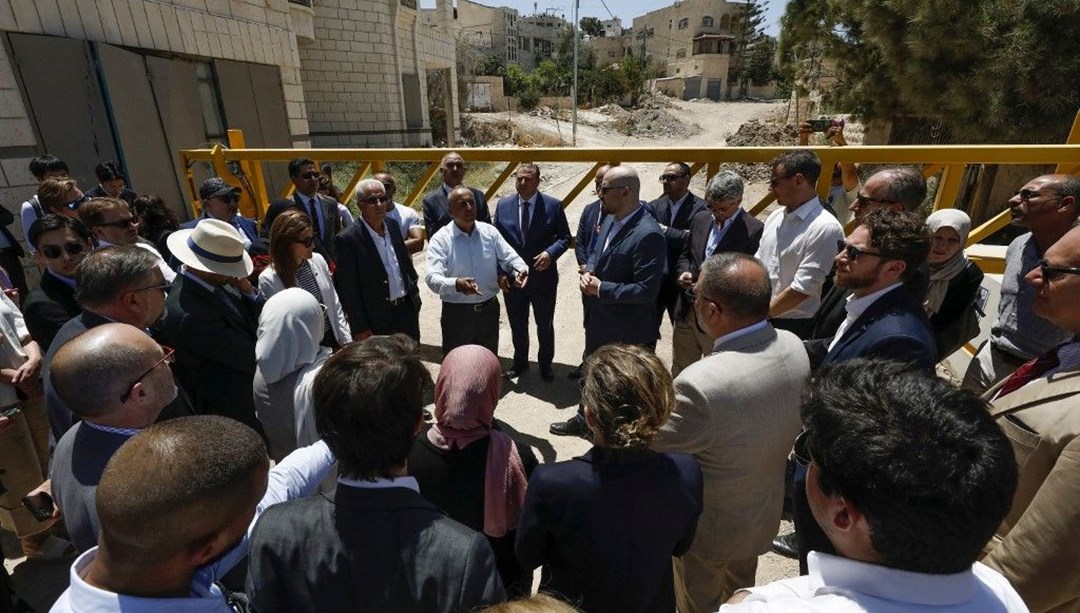
Israeli Forces Fire on Diplomatic Delegation in Jenin Refugee Camp
The situation in the occupying territories has intensified recently, especially in the **Jenin Refugee Camp**, where Israeli forces have shown a disturbing level of aggression. Ahmed ed-Dik, the Deputy Foreign Minister of **Palestine**, reported that Israeli soldiers opened fire to “intimidate” and “subdue” a foreign diplomatic delegation visiting the camp.
According to Dik, “Israeli occupation forces violated protocols by firing **live ammunition** as a diplomatic convoy, consisting of **35 ambassadors**, **consuls**, and other diplomats, arrived at the entrance of the camp.” This aggressive action has raised significant concerns regarding the treatment of foreign representatives and the ongoing conflict.
Dik vehemently condemned Israel’s actions, emphasizing the need for an end to the **attacks** against Palestinians in the West Bank and Gaza Strip. He called for accountability from Israel and urged a ceasefire to restore peace in the region.
Inclusion of Turkish Diplomats
The diplomatic delegation included representatives from Turkey’s **Consulate General in Jerusalem**, highlighting the international dimension of the ongoing conflict. The presence of Turkish diplomats sheds light on the **global community’s** involvement and concern regarding the situation in Palestine.
Israeli Army Defense and Justifications
In response, the Israeli army issued a statement claiming that the diplomatic delegation entered Jenin in a “coordinated” manner. They alleged that the diplomatic group was provided with an approved route, and due to the area being an active **conflict zone**, they were instructed to follow this path. This assertion reveals the complex dynamics and communications—or lack thereof—between Israeli forces and foreign diplomats operating in the area.
The statement from the Israeli military pointed out that soldiers fired warning shots to disperse the diplomats, asserting that there were no injuries or property damages reported, thus framing their actions within the context of **self-defense** and security measures.
Escalating Violence in the Region
The backdrop to these recent events is the ongoing violence that has escalated since October 7, 2023, when Israel initiated significant offensives against **Gaza Strip**. Reports have indicated a substantial increase in the violence against Palestinians in the **West Bank** and **East Jerusalem**. Since this escalation began, 962 Palestinians, including 171 children, have been killed due to confrontations with Israeli forces. This spike in fatalities and injuries reflects a growing humanitarian crisis in the region.
In this troubling period, over **7,000 Palestinians** have sustained injuries, and **16,400** individuals have been detained. This highlights the far-reaching impact of military actions and systematic oppression faced by the Palestinian communities during this volatile time.
Operation “Iron Wall” and Continued Aggression
Following a temporary ceasefire that was established on January 19, the Israeli army continued its aggressive operations, particularly targeting the northern areas of the West Bank, such as **Jenin** and its refugee camp. This operation, labeled “Iron Wall,” signifies a strategic escalation in military tactics by Israeli forces, aiming to tighten their grip on the region.
The scope of Israeli military actions has expanded significantly, leading to actions in **Tulkarem** and **Tubas** as well. These operations represent a continued commitment from Israel to maintain its military presence and control over Palestinian territories, exacerbating fears and tensions among local populations.
Community Response and International Attention
The response from the local Palestinian community has varied from protests to calls for international intervention. Many Palestinians view the actions of Israeli forces as part of a broader strategy to suppress their rights and deny them autonomy. The scale of violence has drawn increasing attention from international organizations, calling for reforms and actions to ensure the protection of human rights.
The Role of Diplomacy Amid Crisis
In such a fraught environment, the role of **international diplomacy** becomes crucial. The involvement of diplomats, including those from Turkey, reflects a commitment to addressing the crisis and advocating for peaceful resolutions. However, the risks associated with reaching out to conflict zones remain significant, as evidenced by the recent incident in Jenin.
While international representatives aim to foster dialogue, the violent atmosphere complicates these efforts. The firing upon the diplomatic delegation serves as a stark reminder of the precarious state in the region and the difficulties faced by those striving for peace and understanding amidst conflict.