
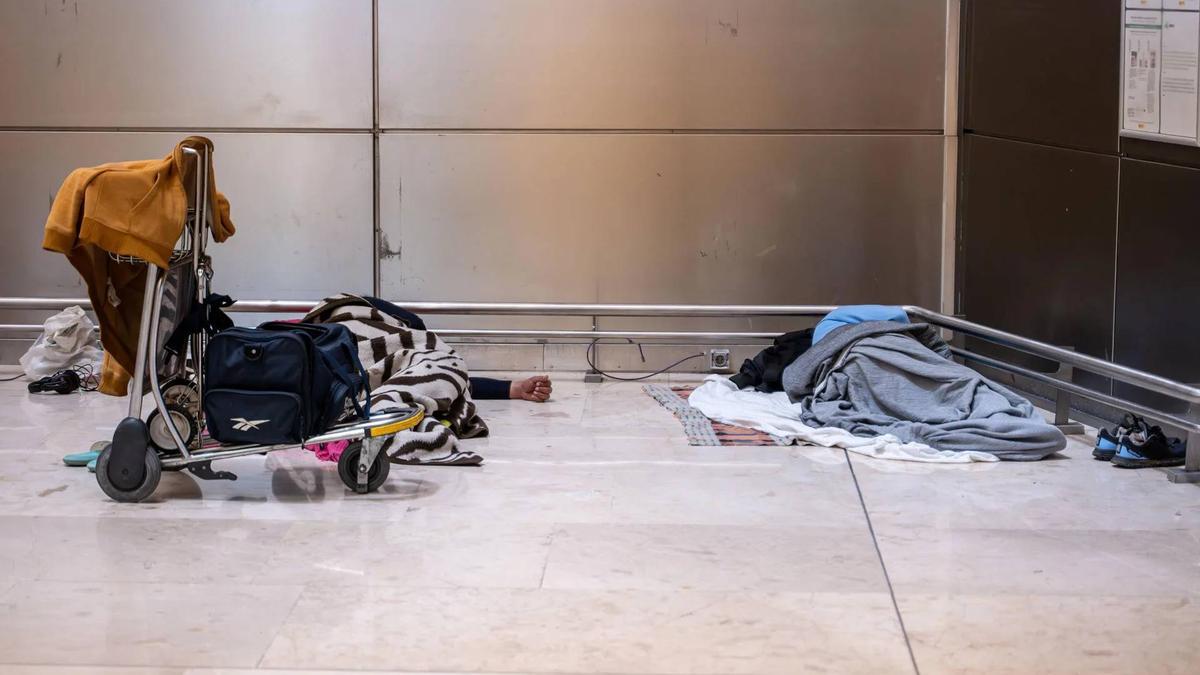
Addressing Homelessness at Adolfo Suárez Madrid-Barajas Airport
The ongoing **crisis of homelessness** in Spain has reached alarming levels, particularly highlighted by the presence of over **400 homeless individuals** residing at **Adolfo Suárez Madrid-Barajas Airport**. Despite the urgency of the situation, a meeting between **Aena** (the airport management body) and the **Madrid City Council** remains undated, leading to an exchange of blame between various government entities. The failure to address this humanitarian challenge effectively underscores the systemic issues facing vulnerable populations in urban settings.
Current Measures Implemented by Aena
In an effort to manage the situation, Aena announced on **Tuesday** that starting **Wednesday**, they would impose limitations on access to airport terminals during the night, specifically from **21:00 to 05:00**. This decision follows a meeting of the **Local Security Committee of Aena**, which aimed to devise strategies for controlling access during off-peak hours. According to reports from airport workers, this measure is intended to prevent further deterioration of the situation.
During these hours, access to the terminals will be restricted to ticketed passengers and their escorts, as well as airport employees. In addition, Aena will **increase security personnel**, with 22 guards stationed during the night hours, who will conduct thorough **documentation checks** at terminal entrances.
Political Tensions and Blame Games
The staggering number of individuals sleeping at the airport has incited **political tensions** between the central government, the **Community of Madrid**, and the city council. Each government level is attempting to deflect responsibility. The Spanish government asserts that this issue is under the purview of the local Madrid administration. On **Monday**, **Jorge Rodrigo**, the regional Minister of Housing, Transport, and Infrastructure, lambasted the central government for its inhumane policies regarding issues surrounding the homeless living at the airport.
The **President of Aena**, **Maurici Lucena**, further added to the political fray by urgently requesting a meeting with **Madrid’s Mayor, José Luis Martínez-Almeida**. In his letter, Lucena emphasized the airport facilities as properties belonging entirely to the municipality of Madrid, indicating that local leadership should be accountable for finding solutions to the pressing homelessness crisis.
The Absence of Accurate Statistics
Amidst this turmoil, Mayor Almeida indicated a willingness to meet but demanded the inclusion of relevant ministries, such as those overseeing **Interior Affairs** and **Migrations**, and the delegation of the central government. Almeida criticized Aena’s management for lacking an up-to-date census of the homeless population. The only available data has come from the **Hospitality Table of the Diocese of Madrid**, which conducted interviews revealing critical insights into the living conditions of those sleeping in the airport.
Out of **137 interviews**, findings indicated that **78%** of homeless individuals were men, a figure consistent with national trends showing a **marked male predominance** in homelessness. These statistics highlight the urgent need for targeted interventions and policies aimed at addressing the nuances of homelessness in urban environments.
The Demographics of the Homeless Population
The data from the Diocese of Madrid revealed that a significant portion of the homeless individuals at the airport comprises foreign nationals. Only **26%** possess Spanish nationality, while **46%** hail from American countries, **14%** from other European nations, **9%** from Africa, and **2%** from Asia. Alarmingly, **80%** of these individuals have lived in Spain for over six months, with many of them having spent a substantial time — often more than **six months** — residing within the airport.
Additionally, more than **half (52%) of respondents** are registered residents of Madrid. While many face extreme housing instability, it’s noteworthy that **38%** of these individuals are employed, and **90%** actively engage in daytime activities outside of the airport. This situation reveals the complexities surrounding homelessness and employment, further indicating a dire need for supportive services rather than mere oversight.
Concluding Thoughts on Policy Changes
The crisis at Adolfo Suárez Madrid-Barajas Airport raises significant questions about municipal responsibility and effective policy implementation. As political leaders engage in blame-shifting, the plight of vulnerable populations remains largely overlooked. A coordinated response involving local and national actors, alongside comprehensive data collection and policy interventions, is essential for addressing the growing issue of homelessness effectively.
Without immediate and decisive action, the situation will only deteriorate further, threatening the dignity of those affected and complicating the broader public discourse surrounding urban homelessness in Madrid and beyond. It is time for leaders to prioritize humane solutions over political expediency, ensuring that the most vulnerable members of society are neither ignored nor marginalized.