
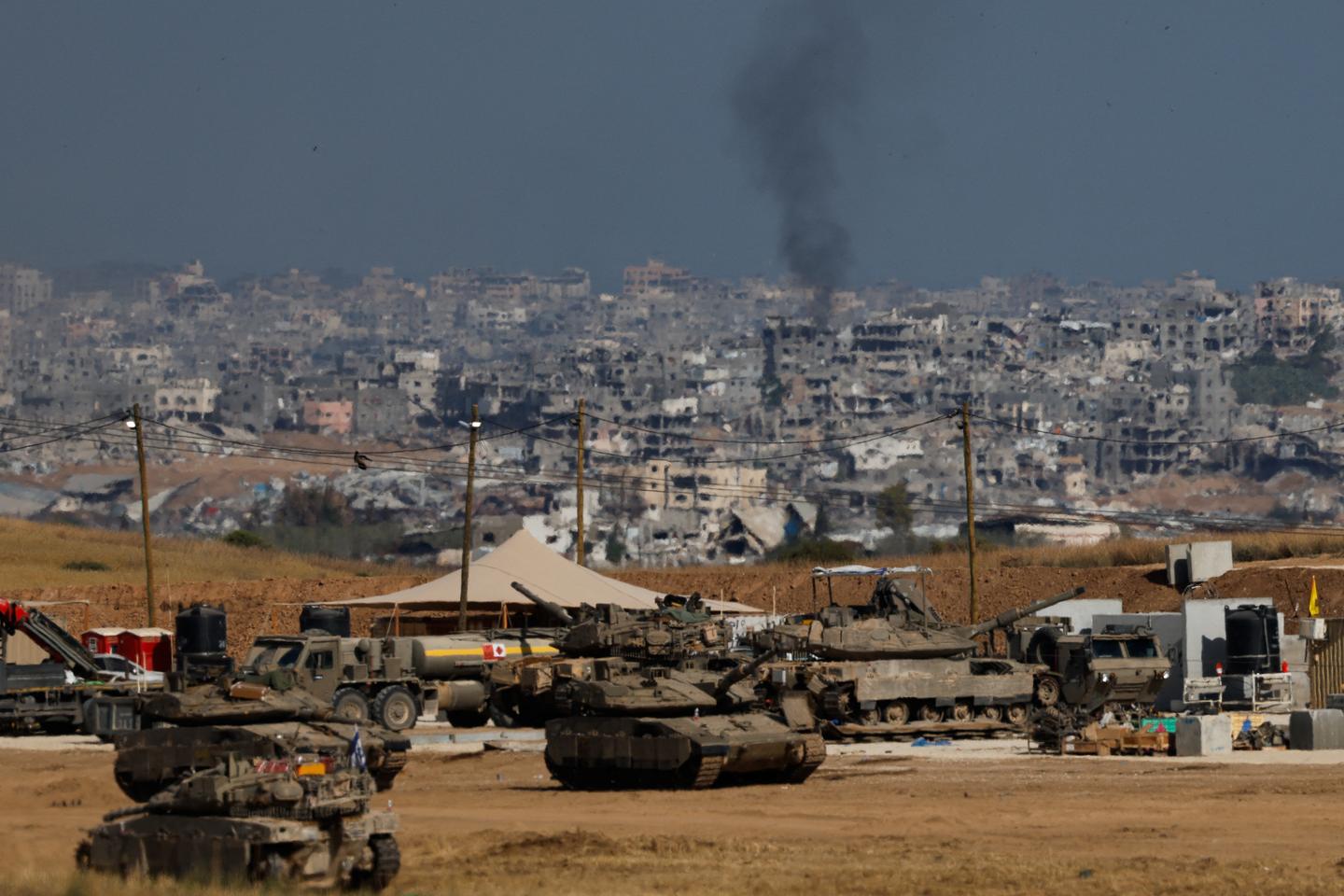
Current Situation in Gaza
In mid-February 2024, **four months** after the attacks committed by **Hamas** on October 7, 2023, **Pedro Sanchez**, the **Spanish Prime Minister**, and his Irish counterpart, **Leo Varadkar**, sent a letter to the **European Commission**. They requested an **urgent examination** to determine if **Israel** was respecting its obligations, particularly within the framework of the **EU-Israel Association Agreement**.
Live, war in Gaza: Israel denounces a “total misunderstanding of reality” on the part of the EU which announced a re-examination of its association agreement with the Hebrew State
The concern arose from the numerous **violations** of **humanitarian law** documented by **NGOs** during **Israeli military** operations in the Gaza Strip. By that time, the casualties had risen to **28,000 Palestinian victims**. The leaders questioned how these actions aligned with the commitments made in the agreement, which had governed both political relations and trade liberalization since **1995**. Notably, the **EU Commission** at that time did not respond to the letter.
Fast forward to May 20, 2025, in Brussels, the scenario had worsened, with the Gaza Strip under a **humanitarian blockade** for **eleven weeks**. The toll had risen dramatically to over **52,000 victims**, predominantly consisting of civilians. **Kaja Kallas**, the head of **European diplomacy**, announced that the **Commission** would thoroughly review Israel’s compliance with their association agreement. This announcement came amid a **catastrophic** situation in the Palestinian territories, which have been largely reduced to ruins and, in some cases, reoccupied. This time, the **EU** could not avoid taking action.
International Reactions
The international community’s response is pivotal in addressing the ongoing conflict. Major powers, including the **United States**, have echoed calls for **restraint** but face pressure domestically and internationally to advocate for a more proactive stance. Many human rights organizations, including **Amnesty International** and **Human Rights Watch**, have condemned the attacks, emphasizing the need for immediate **humanitarian access** and **protection** for civilians.
Calls for a **ceasefire** have intensified, highlighting the urgent need for diplomacy. Recent **protests** around the world demand that leaders take action to prevent further loss of life and to hold those responsible for violations of **international law** accountable. The **European Union** is caught in a delicate balancing act, trying to maintain political ties with Israel while addressing rising humanitarian concerns.
The Humanitarian Crisis
The ongoing military operations have significantly exacerbated the **humanitarian crisis** in Gaza. Essential services, including **healthcare**, **water**, and **food supplies**, have been critically impacted. The **blockade** has hindered access to basic needs, leading to widespread suffering among the civilian population.
With the United Nations reporting severe shortages, aid organizations struggle to provide support amidst the chaos. **Refugee camps** have burgeoned, and overcrowding has created unsanitary conditions, heightening the risk of disease outbreaks. Therefore, the need for international aid and relief efforts has become imperative.
Future Prospects
Looking ahead, the path to peace seems challenging. There is a pressing need for renewed negotiations and dialogue to establish a lasting resolution to the Israeli-Palestinian conflict. **Bilateral talks** among stakeholders could provide a framework for understanding, but a neutral mediator will be essential to facilitate such discussions.
The **EU’s** involvement and the ongoing scrutiny of Israel’s actions are pivotal. As international attention focuses on the crisis, stakeholders must prioritize the dignity and safety of those affected. The future of Gaza will depend on both regional cooperation and concerted efforts from the global community to foster a long-lasting peace.