
In Light of the Latest Events in Gaza, the European Union Will Re-examine Its Association Agreement with Israel
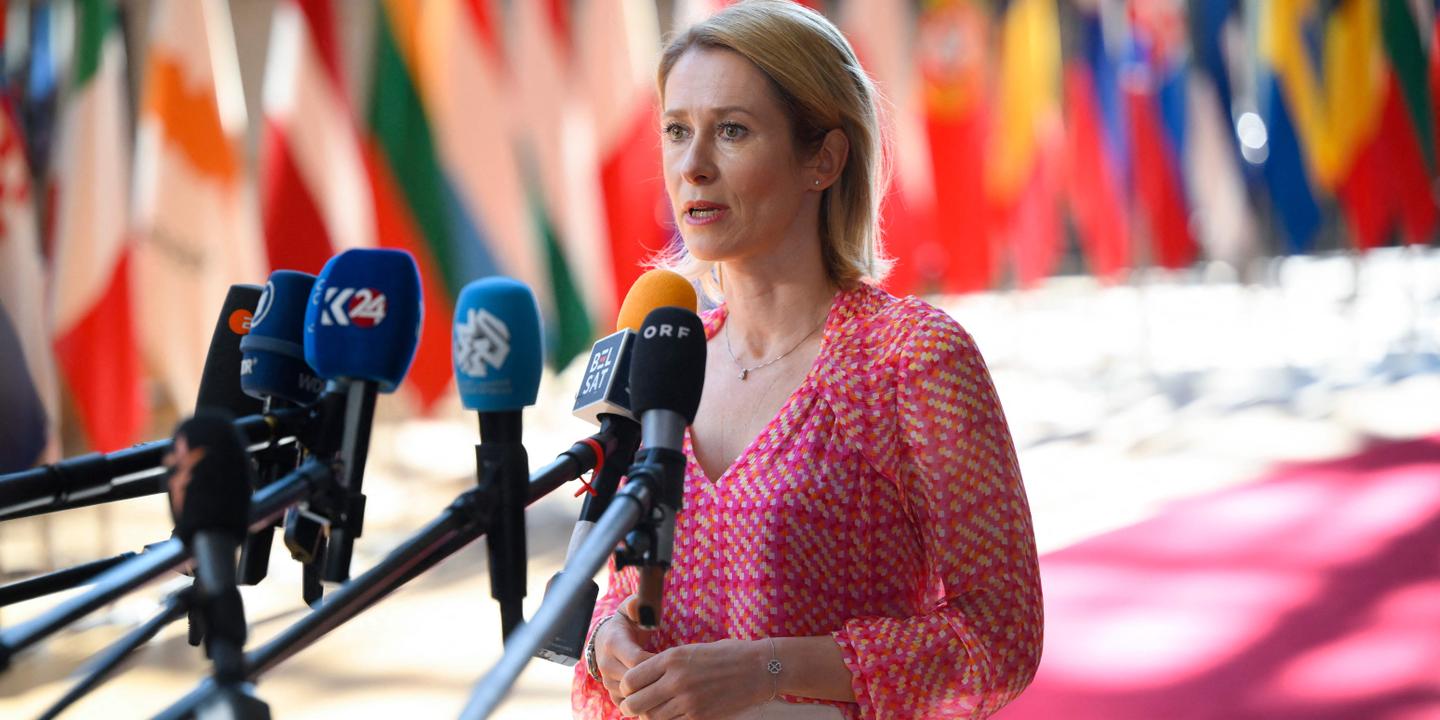
“There is a large majority in favor of the review of article 2 [concerning the respect of human rights] of our association agreement with Israel. So we are going to embark on this exercise,” announced Kaja Kallas, the head of European diplomacy, after a recent meeting of the EU’s foreign ministers in Brussels.
Signed between the **European Union (EU)** and **Israel** in 1995 and coming into force in 2000, this **association treaty** not only established a political dialogue but also emphasized the **liberalization of trade**. Consequently, the EU quickly emerged as Israel’s primary trade partner. Over time, this agreement has expanded, integrating Israel into multiple EU policies in areas such as research and student mobility, notably through the **Erasmus program**.
Initially, the association treaty aimed to bolster the **peace process** initiated in 1993. Simultaneously, Europe committed to assisting the **Palestinian Authority**, a move that led to an agreement in 1997 focusing on creating the **infrastructure** for a future Palestinian state.
The second article of the association agreement clearly states that relations between Europeans and Israel are based on “respect for human rights and democratic principles, which inspire their internal and international policy.” However, various Israeli governments, beginning with that of **Ariel Sharon** (2001-2006) and **Benyamin Netanyahu**, have largely neglected these commitments, resulting in an acceleration of **colonization** and the appropriation of **Palestinian lands**. It wasn’t until 2012 that the EU took action by halting not the agreement itself but the political dialogue at the ministerial level. This dialogue was re-established in 2022, although **no significant progress** was noted that year.
The recent events in **Gaza** have reignited debates surrounding the EU’s relationship with Israel. As calls grow louder for the EU to reassess its association agreement, the impact of this treaty on both European and Israeli politics becomes increasingly critical. As Kalla stated, there’s a “large majority” supporting this review. This signals a growing consensus within the EU for a more assertive stance regarding **human rights** and **democratic values**.
The Historical Context of EU-Israel Relations
The foundational rationale for the EU’s relationship with Israel has always been rooted in **promoting peace and stability** in the region. Through trade agreements and diplomatic dialogue, the EU aimed to create an environment conducive to a peaceful resolution between Israelis and Palestinians. Yet, the **expansion of settlements** and breaches of international law have challenged these diplomatic efforts, often creating a rift between the EU’s policy intentions and actual outcomes on the ground.
The **Palestinian cause** remains at the forefront of EU policy discussions. The association agreement also serves as a crucial leverage point for the EU in advocating for Palestinian rights. As ongoing conflicts persist, the EU’s ability to influence Israeli policy through economic incentives and dialogues remains a pressing challenge.
The Role of Public Opinion and Advocacy Groups
Public opinion within Europe regarding the Israeli-Palestinian conflict has been shifting, with growing dissatisfaction observed among citizens towards Israel’s actions in Palestinian territories. Advocacy groups play a potent role in this discourse, urging European leaders to take a firm stance based on **human rights** and **international law**.
Social media platforms and grassroots movements have become vital avenues for this advocacy, helping to shape perceptions and prompt public dialogues about the humanitarian crises occurring in Gaza and the West Bank. As these narratives gain traction, EU policymakers may find themselves compelled to take more decisive actions in terms of reevaluating agreements and potentially imposing sanctions.
Looking Forward: What Lies Ahead for EU-Israel Relations?
As the European Union prepares to re-examine its association agreement with Israel, potential future scenarios remain uncertain. Will the EU prioritize dialogue and diplomacy, or will it opt for stronger measures in light of ongoing human rights abuses? The review of Article 2 will be pivotal in determining not only the future of EU-Israel relations but also the broader dynamics within the region.
The international community, including the United Nations and various human rights organizations, will closely monitor the EU’s actions in this regard. The outcome of this review could ultimately influence international attitudes towards Israel, shaping both political and economic relationships for years to come.