
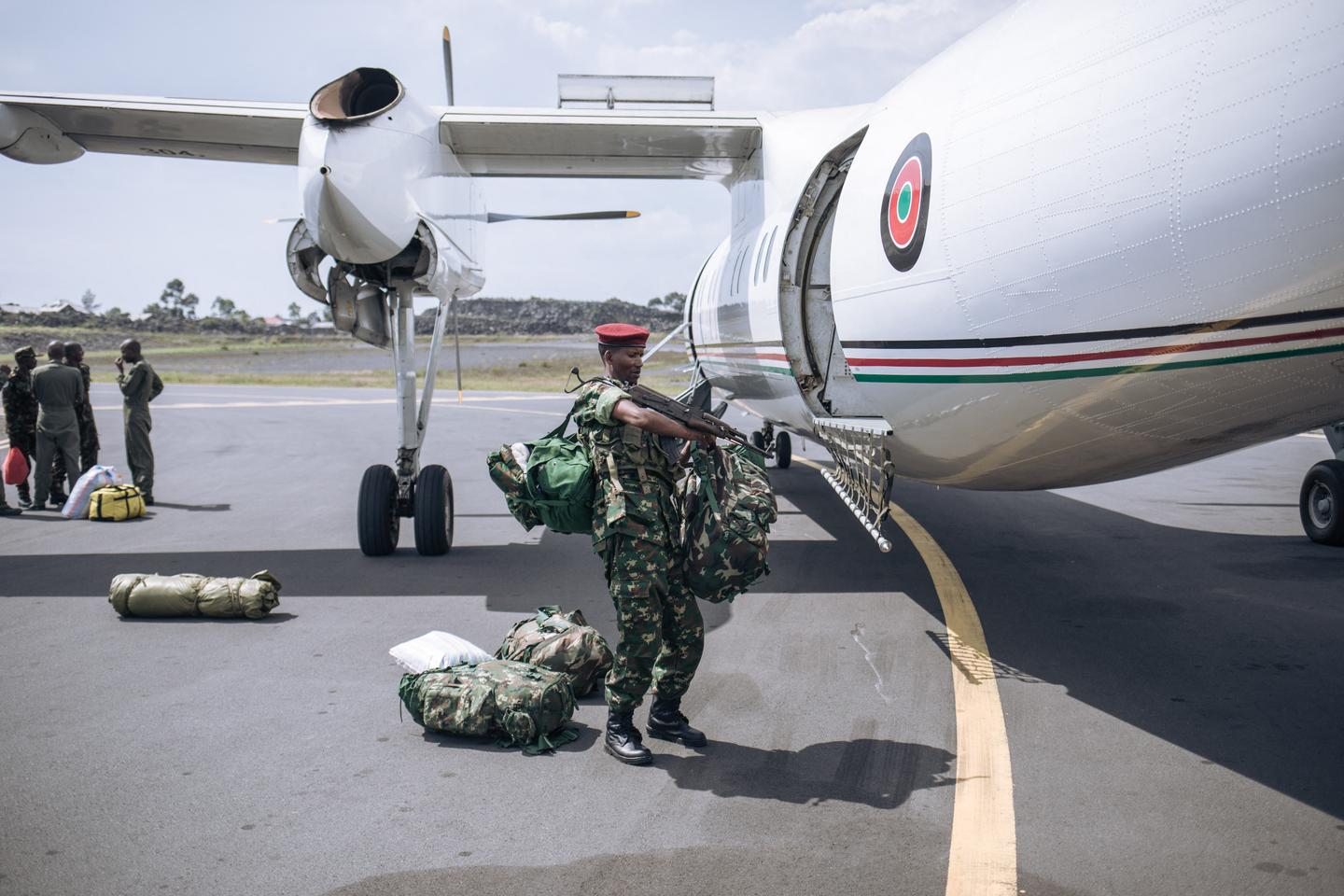
Burundi’s Military Involvement in the DRC: An Overview
In **Burundi**, the discourse surrounding military engagement often appears tightly controlled, with only a select few authorized to represent the nation’s stance. The **ongoing conflict** in the Democratic Republic of Congo (**DRC**) has led to a significant deployment of Burundian soldiers under a controversial **military cooperation agreement**. This situation raises critical questions about governance, transparency, and the safety of the soldiers involved.

Government’s Stance and Media Control
The Burundian government operates under a **martial** narrative when addressing military issues, often monopolized by President **Evariste Ndayishimiye**. His infrequent public addresses aim to provide **official narratives** while suppressing dissenting opinions. Numerous analysts express concern that the ongoing Congolese crisis has intensified state surveillance and restricted public discourse, thereby elevating fears of **dictatorial governance**.
Public criticism remains **rare**, especially about military matters. An analyst, wishing to remain anonymous, observed that various citizens are acutely aware of the combat losses but feel the need to remain silent. This silence stems from fears of repercussions, as even mentioning casualties in private conversations can result in **arrest**. The state’s stringent control over information makes it difficult for families and communities to cope with the **emotional toll** of losing loved ones in combat.
Military Preparedness and Operational Capacity
There are significant concerns regarding the **preparedness** of Burundian troops dispatched to the DRC. Many soldiers reportedly have experience from previous **peacekeeping missions** in nations such as Somalia and the Central African Republic. However, a considerable portion of the troops consists of **recruits** who underwent a mere three months of training before being sent into conflict. These service members often lack the necessary **equipment** and logistics crucial for effective military operations, raising ethical questions surrounding military deployment and national accountability.
The reality of hasty military recruitment has led to a scenario where the forces are sent into battle without adequate preparation, leaving both the soldiers and the Burundian population vulnerable. Given this context, there is a growing discourse advocating for increased transparency regarding military actions and casualties, calling for government acknowledgment of vulnerabilities in operations.
International Implications and Humanitarian Concerns
Burundi’s military engagement in the DRC intersects with broader regional dynamics. Neighboring countries are closely monitoring the situation, especially as military operations can lead to **humanitarian crises**. As soldiers are deployed, local populations often bear the brunt of armed conflicts, leading to increased **displacement** and suffering among civilians.
International organizations have expressed deep concern over the humanitarian situation in the affected areas. The inadequacies in Burundian military training and resources can exacerbate existing tensions and lead to **escalated violence**. Advocacy for a diplomatic approach to the situation in the DRC has grown among various entities, emphasizing the need for effective conflict resolution that prioritizes not just military action but also the **human rights** of civilians caught in the crossfire.
Conclusion
The ongoing military operations in the DRC exemplify complex issues related to **governance**, **military readiness**, and **humanitarian concerns**. The Burundian government’s control over information limits public discourse, even as citizens grapple with the realities of military losses. An increased awareness of both national and international stakeholders is essential to advocate for policies that prioritize the safety and welfare of Burundian soldiers and the civilian population affected by conflict.
This content provides a comprehensive overview of the military involvement of Burundi in the DRC while maintaining SEO-friendliness with the inclusion of relevant keywords and well-structured headings. The selected image and its description contribute to the overall narrative.