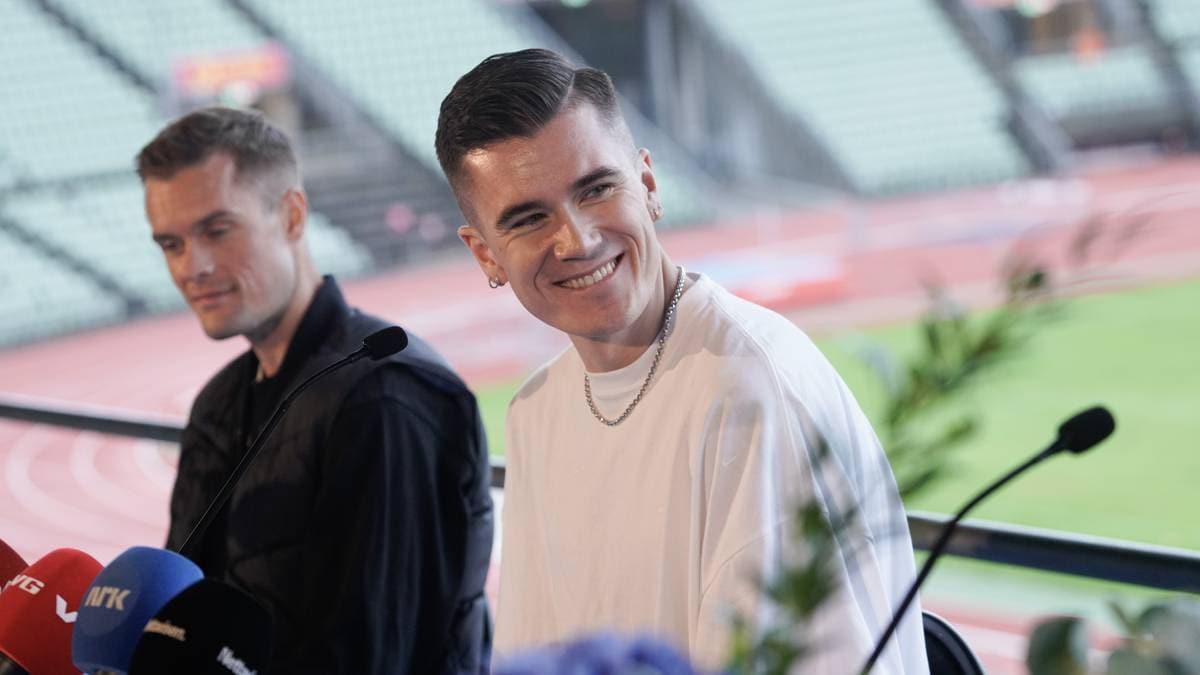
– I get at least eight hours of sleep. But hopefully nine hours and 15 minutes. I think it’s perfect. That’s what Jakob Asserson Ingebrigtsen says in a video published on his own YouTube channel. But why this specific length of exactly nine hours and 15 minutes? – I just feel that it is the limit where I feel really rested. But usually just under nine hours. That’s the normal thing, says Ingebrigtsen in the video. – Not something you can only order sleep scientist Siri Waage at the University of Bergen is aware that sleep and good sleep routines are important for presentation, and that top athletes must to a greater extent facilitate how sleep affects them. About Jakob Ingebrigtsen’s ideal sleep, she says: – That you can specifically say exactly how many hours and minutes you need to be in optimal, I put a little question that. Most will know when they are rested and when they are not rested. Sleep is not something you can only order, she says, and continues: – Even if you arrange to sleep for 9 hours and 15 minutes, you may not be able to sleep for 9 hours and 15 minutes. Sleep is regulated by our circadian rhythm, how long you have been awake and our behavior. Sleeping “Half” 24 hours: – Need so much sleep Ingebrigtsen’s amount of sleep largely matches the advice the Olympics presented in January this year. There they wrote that they recommend most top athletes at least eight hours of sleep per night – and preferably more if needed. Potentially up to ten to twelve hours, especially during periods of heavy burden, they write in their recommendations. Professional consultant at the Olympics, Fredrik Mentzoni, helped lead the work of preparing the sleep recommendations. He says that sleep is a topic that many are curious about. – In the Olympics’ own surveys of Norwegian athletes, we see our best athletes mostly sleep within our recommendation, and that many sleep as much as they want, Mentzoni writes to news. One who can quickly sleep up to twelve hours is the athletics profile Lovise Skarbøvik Andresen. -I sleep around nine to ten hours at least, every night. It is important to sleep, and I sleep some day of the day as well. Often one to two hours after exercise as well. I very much agree with Ingebrigtsen that you need so much sleep. – So you’re just awake half the day? – Something like that. In fact, she says with a smile. Well sleeping heart: Lovise Skarbøvik Andresen often sleeps at least ten hours a day. Here from the European Championships last year. Photo: Heiko Junge / NTB- does not have to focus on sleep as many hours it will not be at Sander Skotheim, who took both European Championships and World Cup golds in seven matches indoors earlier this year. – I lie around seven to eight hours. It might have been 8+ every night, but I’m not so super sneaky about it. As long as I feel rested when I wake up, I think things are going well, he says to news. – I feel that in all these areas that are very good things, sleep, diet and exercise, as there is a little hype around, there may be we top athletes most relaxed. For us it is so natural to focus on it. In a way, I don’t have to focus on sleep, because it’s something that is very basic about being an athlete, says Karoline Bjerkeli Grøvdal. Natural: Karoline Bjerkeli Grøvdal and other top athletes do a lot to optimize their own chances of performance. Here she is on the massage bench. Photo: Christian Ziegler Remme / news warns against sleep surveillance with new technology, many are now following their own sleep through among other smart watches. – The entry of sleep monitoring on heart rate watches and pulse rings made “sleep optimization” become something some is curious about, writes Mentzoni in the Olympics. In their recommendations, the Olympics recommend the use of such tools. – The use of sleep meters to monitor sleep is not recommended. In particular, this applies to monitoring one’s own sleep without medical support or guidance, writes the Olympics. It is based on the fact that they think today’s measurement methods are not accurate enough to monitor it from day to day, and that “even an accurate meter can cause more disadvantage than utility”. – For many athletes, it will be just fine to “monitor” their own sleep, but for some this may cause increased stress and concern, which is not necessarily positive to optimize exercise and competitive performance, and which can also aggravate any sleep problems, Mentzoni writes. Sleep score: Do you trust this number? You shouldn’t, says sleep experts. Photo: Illustration: Simon Zetlitz Nessler / news – Everything must be interpreted with caution. It’s nice and great with these apps and smart watches, but it’s not a facet. It can give you a clue. In healthy, normal with good sleep, it may be relatively good accuracy, but it doesn’t have to be, says sleep scientist Waage at UiB. – So we are generally a little negative about the use of those smart watches. At the same time, it can also be a little help in optimizing your sleep if you are not stressed by the results. It’s a bit of a double egg, she explains. – Trying to get as high a sleep score as possible both Skotheim and Andresen say that they follow a little on sleep data from smart watches. – I like to go in and look at the sleep score, and try to get as high a “sleep score” as possible, says Skotheim. – I think it’s a good tool as long as you don’t get too hung up on it. Sleep is important, but if you start stressing that you should have eight to nine hours each night and should have such a good sleep score. Then you get a little disappointed when you wake up and don’t get that sleep score, he says. – I am not very concerned about it, so if it says that I am 40 percent recovered, but I feel good, then I feel good. It is not that I let it affect whether I feel good or not, says Andresen, adding that it is “fun to watch occasionally”. One who does not want to look at is Karoline Bjerkeli Grøvdal. – If you have no problems with sleep, why should I monitor my sleep to get numbers and data on it, she asks. – For my part, it’s a bit like I don’t want to know those numbers as long as I don’t have a problem, she says. Published 10.05.2025, at. 15.56
ttn-69