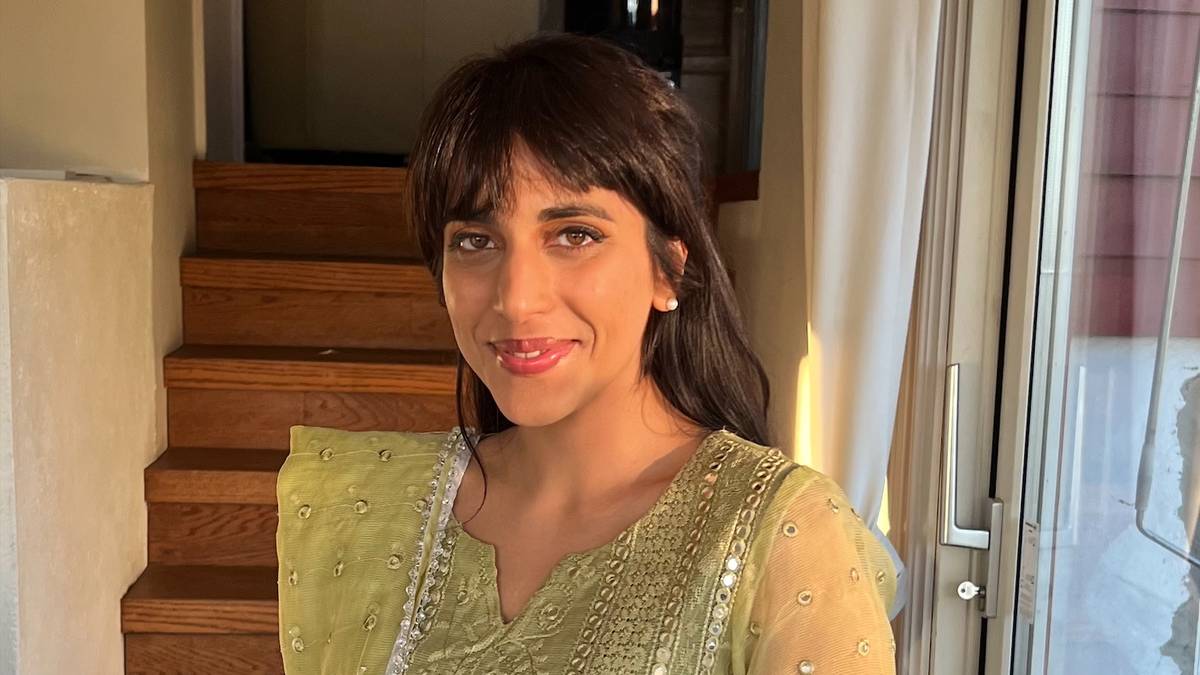
The reactions hail on Tiktok when the South Asian garment Duppatta was presented by Western influences as a Scandinavian scarf. – It hit a tender point, says Tehrim Ahmed Malik (28). Here Malik wears a Sari, where Dupatta is located over the shoulder. Here Malik Dupatta has between his arms, along with an anarchali dress from Suffuse. Photo: Private here is the dupatta on one shoulder, along with a Shalwar Kameez. This is used over large parts of India and Pakistan. Photo: Private Malik was born and raised in Norway, but has its roots from Punjab Province in Pakistan. She feels that South Asian culture is not perceived as trendy or beautiful before it becomes “rebranded” as something western. Many Western Tiktok influeners have jumped on the trend of using Dupatta or Scandinavian scarves, as they call it. Below you will see the records this has created: Under the hashtag #dupatta you will find many videos with counter-reactions on the Scandinavian Scarf trend. Here, a TIKTOK influences shows their dupatta with the text “Where are all my Desi girls, ready for a European summer?”. Here, a TIKTOK influences shows its dupatta with the text “This is a dupatta, not a thin shawl”. More from South Asia has also begun to dress in the finest they have from their culture and embark on the title with the text “Post it before this also becomes Scandinavian”. Many South Asians respond to the fact that the shawl is used without understanding its significance and almost emphasized as a minimalist, Nordic fashion trend. “Scandi-Girl” aesthetics has been in the wind in recent years. With the Swedish influence Matilda Djerf in the lead, the trend makes many outside Scandinavia dress as the girls in Scandinavia. But Dupatta is a traditional South Asian garment and became a symbol of freedom when India achieved independence from the British rule in 1947.-This type of cultural blur is not new, but it must be taken seriously, says Malik. Have you seen these video on social media? Welcome cultural exchange welcome Danby Choi, editor in subject, tells news that cultural exchange is both natural and desirable. At the same time, he thinks it is nice to have knowledge of what you do, but that those who react often do the fight a bear service by whining. – Then you become a bad ambassador for the case you are going to earn. If you have knowledge and takeover, then you do not need to take on such a role, says Choi. Danby Choi is the chief editor of the subject and board member of the Oslo Editors’ Association. Photo: Aurora Ytreberg Meløe / news He thinks it is more important to go in with a kind of educational or knowledge -based attitude. – You don’t need a sacrificial role when someone is trying to copy your culture. Then it is obvious that it is your culture that is good, he says. According to Choi, we need good representatives who manage to convey their bidding cabinet in a way that is compelling and not sutured. Cultural appropriation or cultural exchange? Cultural exchanges Handers about mutual sharing of traditions, expressions and ideas between cultures often occur in the meeting between people with equal power and respect for each other’s background. Cultural appropriation occurs when elements from a culture are used by another, often more powerful group, without understanding, consent or recognition. Is often about power and history. Copy or inspiration? Rebecka Forsgrenjurist supports Sami, Swedish and international actors in increasing their knowledge of human rights and intellectual property Rebecka Forsgren believes that it is important to understand that everyone is not entitled to everything. “When people copy cultural products without understanding their importance, it can damage both the culture and the economy of the original creators,” she says. Recently, various online stores have started selling clothes that are strongly inspired by Indian culture. Here Abercrombie & Fitch sells a dress inspired by traditional clothes from South Asia. Photo: Private here sells H&M clothing inspired by Kurta and Lehenga, which are typical South Asian garments used by both women and men. Photo: Private Here the Australian brand Vrg Grl Earrings Sells that, looks like Jhumka, often used by Indian women. Photo: Private Forsgren points out that there is a difference between copying and inspiration. – Have you tried to imitate what someone else has done? Then you are not creative, and then you should not get any money for it, she says. – I call this simply stealing, says Tehim Ahmed Malik. – When something from my culture is first appreciated when it is wrapped in a white aesthetics, then I feel injustice. Photo: Private context disappears the discussion about cultural appropriations appears regularly in the media. Sometimes in the form of hairstyles, other times a halloween costume. Marta Bivand Erdal Research Professor in Migration Studies Researcher Marta Bivand Erdal believes that our reactions are shaped by our history, the society we live in and how we meet each other. – Social media and globalization have created a boundless international arena where visual content abounds, especially on platforms such as Tiktok and Instagram, says Erdal. She believes that this means that the context often disappears when things are shared. At the same time, Norwegian society has changed. Several have visible minority backgrounds and there is greater cultural diversity than before. According to Erdal, it helps to make the discussion of cultural appropriation different. – Young people today feel freer to express themselves and react more strongly to injustice and discrimination, she says. Erdal believes that this is something that also affects how young people react to cultural appropriation. We need to talk together some feel pride when others show interest in their culture. Others know about soreness and invisibility. How are we really navigating this? Researcher Marta Bivand Erdal, believes the key is not to avoid disagreement, but to dare to stand in it. Marta Bivand Erdal is concerned with belonging and interpersonal relationships that extend across borders. Photo: Ebba Tellander – We need to talk more face to face. Get to know each other as humans, says Erdal. She believes that it is the way we can have confidence, recognition and belonging together in Norwegian society. Furthermore, she says that in a society that becomes more diverse for each generation, we may not always have to agree, but we must be curious enough to try to understand. – This underlines the importance of disagreement communities, where we can be friends even if we disagree. Hi! Thanks for reading! Do you have tips or input on this case or other things I should write about? Feel free to send me an email! Published 07.05.2025, at. 17.46
ttn-69