

What challenges did Vietnamese families face when fleeing their homeland after the Vietnam War? How did the journey of Dzong Tran’s family reflect the experiences of other refugees? What role does community play in the lives of Vietnamese families in Arlington? In what ways has Vietnamese culture contributed to the success of these families in the U.S.? How did Quang Le’s family adapt to their new life in America after posing as the Hoa people?
Many Vietnamese families settled in Arlington after fleeing the country during the Vietnam War. Two families share their story 50 years after the Fall of Saigon.

All throughout May, stories celebrate Asian American and Pacific Islander Heritage Month and the people and places shaping the D.C. region.
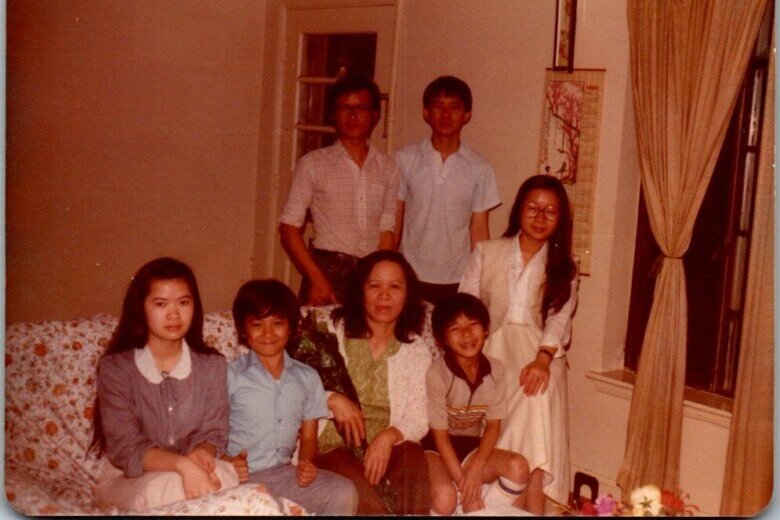
Dzong Tran was 17 years old when communist Vietnamese soldiers forced his family to flee his homeland.
The journey for him, his mother, and five siblings included monthslong stops in Guam, Arkansas, and Texas.
The family ended up in a growing Vietnamese community in Clarendon, Virginia, in 1976. His father, who couldn’t get out of Vietnam quickly, arrived later.
“It was a very hard journey. We never forgot how lucky we were,” Tran said. “We always look back at escaping Vietnam, and we were able to find friends and family and engage in community.”
This week marks the 50th anniversary of the Fall of Saigon, the moment that ended the Vietnam War. The event caused more than 2 million Vietnamese refugees to flee to safety in the U.S.
Many of them landed in what was then called “Little Saigon” in Arlington.
Since then, Tran has worked in fast-food restaurants, graduated from college, gotten married, and raised his own family. He said optimism about the future of Vietnam keeps their community strong.
“One of the things we all strive for is … a better Vietnam,” Tran said. “We all look back to help steer Vietnam to a more democratic society and move away from a dictatorship.”
Vietnamese culture and food have also aided former refugees’ survival in the U.S., he added.
“Every year, we get together for New Year’s festivals and other events for children and families,” Tran said. “And food definitely brings us together.”
Quang Le agreed. He was about 9 years old when his family posed as people of Chinese descent who lived in Vietnam, known as the Hoa people. The communist government implemented policies forcing Chinese Vietnamese to leave the country.
It was the only way out, Le said.
“We are as pure Vietnamese as can be,” he said. “We assumed Chinese identity because there was no guarantee that we were going to make it.”
His family made a stop in Utah before arriving in the growing Vietnamese neighborhood in Arlington in the spring of 1980.
“Never underestimate the power of community,” he said.
After years of struggling financially, his mother got an idea. She began baking and selling bahn mi sandwiches filled with meat and pickled vegetables. It paid the bills, helping her and Le’s father, who arrived a few years later, raise eight children.
“I remember being hungry all the time. There was a lot of uncertainty,” Le said. “She made sandwiches, and her boys went out and sold them and that’s what we did. It’s a proven formula.”
Since then, the venture has morphed into a successful eatery — the Huong Binh Bakery and Deli. Le’s mother passed away in 2021, but his 94-year-old father still helps with the business.
Le said he still remembers escaping Vietnam but has lived in the U.S. longer than in his birth country.
“Fifty years goes by fast when you’re busy,” he said. “This is my reality now and we’ve done well for us. I don’t know how my life would have been (in Vietnam).”
Vietnamese Americans in Arlington Mark 50 Years Since the Fall of Saigon
In 2025, Vietnamese Americans in Arlington, Virginia, are poised to commemorate a significant milestone: the 50th anniversary of the Fall of Saigon, a pivotal event that marked the end of the Vietnam War and the beginning of a new chapter for countless individuals and families who sought refuge in the United States. This period not only reshaped the Vietnamese community but also left an indelible mark on Arlington itself, known for its diverse population and rich cultural fabric.
Historical Context
The Fall of Saigon occurred on April 30, 1975, culminating in the chaotic evacuation of South Vietnamese citizens as North Vietnamese forces took control of the capital. This marked the end of a protracted conflict that had devastated Vietnam and forced millions to flee their homeland. Many Vietnamese sought asylum in the United States, viewing it as a land of opportunity where they could rebuild their lives.
Arlington became one of the primary destinations for Vietnamese refugees, thanks to its proximity to Washington, D.C., and the support systems established by early immigrants. As more families settled in the area, they contributed to the economic and cultural landscape, creating a vibrant community that still thrives today.
Cultural Celebration and Reflection
To commemorate this momentous occasion, various activities and events are being planned throughout Arlington. One of the key celebrations will be a large community gathering at local parks, inviting residents from all backgrounds to participate in the festivities. This event will include traditional Vietnamese performances, food stalls featuring authentic cuisine, art exhibits showcasing Vietnamese culture, and opportunities for storytelling.
In addition to the cultural festivities, panel discussions and workshops will explore the legacy of the Vietnamese community in Arlington. Topics will include the challenges of integration, preserving cultural identity, and the contributions of Vietnamese Americans to the region’s growth. These discussions will not only honor the history of the community but also educate younger generations about their roots and the importance of cultural preservation.
The Impact on Arlington
The Vietnamese population in Arlington has grown significantly over the past five decades, turning the area into a hub of Vietnamese culture and commerce. Vietnamese-owned businesses, including restaurants, markets, and other enterprises, now line numerous streets, significantly contributing to the local economy. The culinary scene is particularly remarkable, with establishments offering everything from pho to banh mi, allowing locals and visitors to experience the diverse flavors of Vietnam.
Moreover, the community has established various social and cultural organizations that provide resources for new immigrants and foster connections among residents. The Vietnamese American Chamber of Commerce, for instance, plays an essential role in supporting local businesses, while cultural organizations offer language classes and cultural events that bridge generations.
A Personal Connection
For many Vietnamese Americans, the 50th anniversary is not just a date on the calendar; it is deeply personal. Survivors of the war, now aging, carry stories of loss, resilience, and hope. Their narratives often revolve around their escape from Vietnam, their journey to the United States, and the challenges they faced in their new home. These shared experiences form a common thread that binds the community together.
To honor these stories, Arlington’s commemorative events will feature oral histories from older community members. This initiative not only preserves essential narratives but also provides an opportunity for younger generations to learn about their heritage firsthand. Listening to these accounts can foster empathy and understanding, allowing individuals to appreciate the sacrifices made by their predecessors.
Community Engagement
As the Vietnamese community in Arlington reflects on its past, it is equally important to look toward the future. Engaging with local schools and organizations to teach children about the significance of the Fall of Saigon is crucial. Programs that highlight the importance of diversity and inclusion can help create a more tolerant society that values different cultures.
Moreover, collaboration with other immigrant communities can strengthen ties and foster solidarity in Arlington. By showcasing the shared experiences of immigrants, the Vietnamese community can contribute to broader conversations about integration, acceptance, and the collective struggle for a better life.
Conclusion
As Arlington prepares for the 50th anniversary of the Fall of Saigon, it stands as a testament to the resilience and spirit of the Vietnamese American community. Through celebrations, discussions, and storytelling, the community not only honors its past but also fosters a sense of unity and shared purpose for future generations.
This anniversary is not merely a commemoration of an historical event, but a celebration of cultural identity, the strength of community, and the ongoing journey of Vietnamese Americans in Arlington. As they look back on their struggles and achievements, they also embrace the future—committed to preserving their heritage, ready to build bridges across cultures, and eager to contribute to the rich tapestry of American life.
In Arlington, Virginia, the Vietnamese-American community has commemorated the 50th anniversary of the Fall of Saigon, reflecting on their journey from refugees to a vibrant, integral part of the local fabric. Following the 1975 fall of Saigon, many Vietnamese immigrants settled in Arlington, particularly in the Clarendon neighborhood, which became known as "Little Saigon." This area transformed into a bustling hub, with numerous Vietnamese-owned businesses, including grocery stores, restaurants, and cultural centers, offering a sense of community and preserving cultural heritage. (littlesaigonclarendon.com)
Over the decades, the community has faced challenges such as economic shifts and gentrification, leading to the displacement of many businesses and residents. Despite these obstacles, the Vietnamese-American community in Arlington has demonstrated resilience and adaptability. Efforts to preserve their history and contributions include projects like the "Echoes of Little Saigon" booklet, which documents the impact of Vietnamese and Southeast Asian immigrants on Arlington’s development. (arlingtonva.us)
The 50th anniversary serves as a poignant reminder of the community’s enduring spirit and the significant role they play in Arlington’s diverse cultural landscape. Their journey from displacement to establishment underscores themes of resilience, adaptation, and the importance of cultural preservation.
Vietnamese Community Reflects on 50 Years Since Fall of Saigon:
- PHOTO ESSAY: For the Vietnamese diaspora, Saigon’s fall 50 years ago evokes mixed emotions
- ‘Victory of faith’, Vietnamese celebrate 50 years since end of Vietnam War
- Vietnam hails ‘victory of justice’ as it marks 50 years since end of war