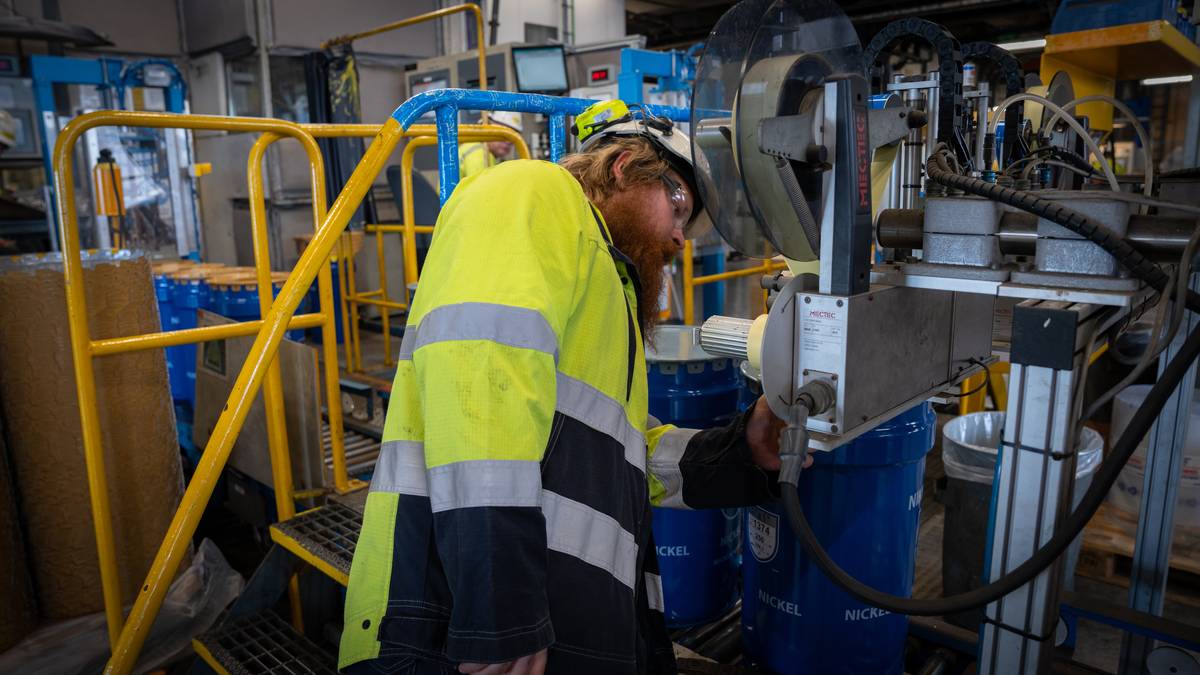
The case summarized: • A national program called “Dyslexive-friendly workplace” (DVA) has been launched to make jobs more inclusive for people with dyslexia, mathematics and language difficulties • The program is supported by the Children’s, Youth and Family Directorate (Bufdir) and is led by Dyslexi Norway and Hans Lund. Inclusion, productivity and security • All Norwegian companies can participate in the program for help to become dyslexic -friendly. There is no certification scheme, but companies must meet certain requirements to achieve DVA status. The summary is made by a Ki service from Openai. The content is quality assured by news’s journalists before publishing. – We need young people with challenges to have a place to grow. That they become an important part of society and life in general, says Erlend Havnås. He is the acting manager of the Pakkeriet in Glencore Nickelverk in Kristiansand. Since 2017, Glencore has taken measures to make the workplace easier for those with writing and reading difficulties. Among other things, they have turned a lot of text into symbols. Forms you have had to read and write on are turned into QR codes. And the changes have had a good effect. After great interest from other companies, “Dyslexic -friendly workplace” (DVA) was launched this week. A national permanent program to ensure a more inclusive working life. Erlend Havnås says that it has been important to him that his workplace has taken into account that he has dyslexia. Photo: Kjetil Samuelsen / news Havnås dropped out of school and started at Glencore as an 18-year-old. He is like around 5 percent of the population, dyslexic, and has had great value of a workplace that took into account just that. – I got an arena to develop, grow and get better. The fact that I was a dyslexic did not put an end to it. On the contrary, says Havnås. There is a lot of information that employees will be able to get to the workplace. Glencore nickel works have taken measures to simplify and facilitate employees. Photo: Kjetil Samuelsen / news will strengthen inclusion In the project description, DVA writes that the working life has become more in writing and places increasing demands on reading and writing skills over time. It creates major challenges for people with dyslexia, mathematics and language difficulties. It is associated strength, Norwegian industry, NHO and LO that go together to reach all of Norway dyslexic -friendly. The program is led by dyslexia Norway and Hans Lund. Lund has long experience in working with the training of young people and adults with dyslexia. On Tuesday there was the launch of “Dyslexive -friendly workplace” at LO Media. Photo: Vegard Blodstrupmoen Lien / news The initiative is supported by the Directorate for Children, Youth and Family (Bufdir), and the new program was officially launched in the spring of 2025. The goal is to reduce shame and outsiders. At the same time, one must strengthen well -being, inclusion, productivity and safety. The program will, among other things, offer membership with corporate visits, guidance and courses. All Norwegian companies can participate to get help to become dyslexic -friendly. There is no certification scheme, but companies must meet certain requirements to achieve DVA status. After participation, the company receives the stamp “Dyslexive -friendly workplace”. Dyslexia Norway is responsible for operations through a newly created limited company, and the economy will be self -financing by 2026. He is now in the leadership of the union strength and has been following the project since its inception in 2017. Nordhaug believes the initiative creates an openness culture that has been lacking in society in the past. – There are people who have often attended school in the 70s and 80s where dyslexia was not known to everyone. This means that they have poor self -confidence, and at least they will not tell about their challenges. Cay Nordhaug in the union strength has been following the project since its inception. He thinks it is fantastic that the project will be a national program. Photo: Vegard Blodstrupmoen Lien / news He says that dyslexia is taboo and shameful. – The fact that we created room for that culture of trust in Glencore was what was groundbreaking for companies. The fact that you dare to say that it is something you do not get, says Nordhaug. He thinks that this is going to be a national program is absolutely fantastic. A great recognition – I think an easy -to -read language, clear language and clear communication, means a lot to everyone. It is extra important for the members who are in dyslexia Norway. This is stated by Caroline Solheim, Secretary General of Dyslexia Norway. Secretary General of Dyslexia Norway, Caroline Solheim, believes an adapted workplace means a lot to society. Photo: Vegard Blodstrupmoen Lien / news Solheim believes the program provides facilitation that will include many more in working life. – This is a great recognition of all workers with reading and writing difficulties, mathematics and language difficulties. They exist and they are important. A huge relief Pernille Vogt works as head of HSE in Norsk Industri. DVA started as a project in the supplier industry for the oil and gas industry. Vogt has an expectation that employers in Norway see the value of joining the program. – Then they can help create good working environments, increase recruitment and create psychological security in the workplace. Pernille Vogt in Norsk Industri believes the program ensures a good working environment and psychological security in the workplace. Photo: Vegard Blodstrupmoen Lien / news Vogt works with health and safety in workplaces in Norsk Industri. She says she has seen with her own eyes how much information each employee must sign that they have understood and read. According to her, so much information has been a rag, even for employees who do not have writing and reading difficulties. – We have learned that it is possible to simplify and that it is possible to make symbols. It has been a huge relief for everyone, says Vogt. Havnås says that he got an arena to develop, grow and get better in the workplace as they became more dyslexi-friendly. Photo: Kjetil Samuelsen / news Published 01.05.2025, at. 20.38
ttn-69