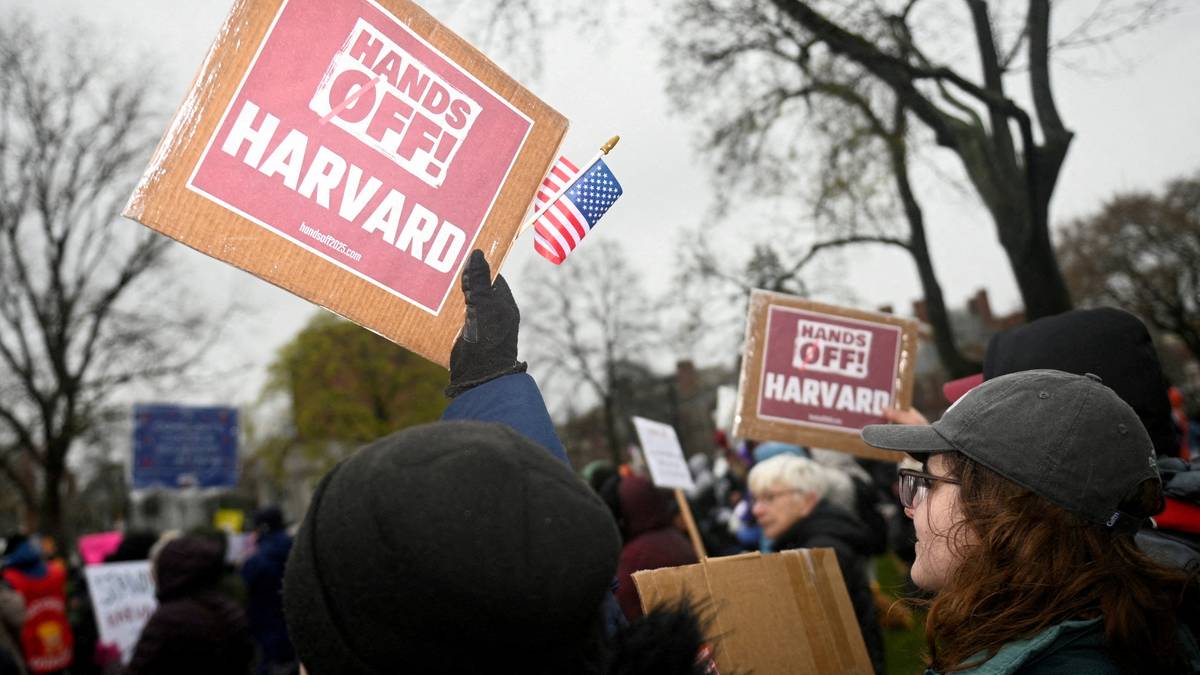
Saka summarized academic freedom in the United States is under pressure due to changes in the research policy of the Trump administration. Studentanes and Academics’ International Relief Fund (SAIH) say that visitors Academics from the United States are being asked by their networks to keep a low profile and not talk to the media. The Trump administration has introduced measures that define the opportunity to conduct research across academic institutions, including freezing of funds for research and termination of academic employees. Two US researchers like news have talked to victory they have noticed the changes gradually, but that they are now very delimited for research freedom at their university and in the United States in general. Norwegian researchers are encouraged by SAIH to keep an eye on the changes, since the United States is the country Norwegian institutions for higher education cooperate most. The summary is created by a Ki-service from Openai. The content is quality assured by news’s journalists before publishing. The effects of Donald Trump’s new research policy can be noticed entirely to Norway. This is the victory of Studentanes and Academics’ International Relief Fund (SAIH), which this week holds a conference on academic freedom in Oslo. – Academics who have been invited here from the United States have been asked by their security networks to keep a low profile and not talk to the media, says tenant Selma Bratberg. Selma Bratberg, tenant in SAIH. Photo: SAIH Such trends are not new to the organizers, tell him. They have invited members of the international research community to Norway for a long year. -But the methods we see that the Trump administration uses, such as arresting student activists and calling them terrorists, and resigning academic employees, we are used to seeing from authoritarian tenants. Since Trump again became president in January, he has introduced a number of measures that limit the opportunity to conduct research across academic institutions. news has talked to two researchers in the United States (not conference participants) about how they have noticed the changes at their universities. Freezing of funds for research Carina Curto is a professor of reverse mathematics at the private elite university Brown University. At the beginning of January, Curto sat in one of the committees that decides what a few research projects will receive federal funding. But once Donald Trump became president again, this process was paused, Curto told news. – The committee leader disappeared for a while. We start getting automatic answers by e-mail that they were not in the office, she says. Brown is one of the universities in the United States that has had large Pro-Palestinian demonstrations after October 7, 2023. Here is marked in the grass after the tent camp at the University Square, in April 2024. Photo: David Goldman / Ap / NTB-the payout of all scholarships, even scholarships that were allocated. The governing powers had to have time to weed out applications that were not in line with the president’s new guidelines. Carina Curto at Brown University. Photo: Brown University – It was the first sign that something was seriously crazy, says Curto. Now she thinks that the administration has gone to targeted attacks on research freedom in the United States. – Our vice president, for example, has made it very clearly before he thinks the university is the enemy, holding him forward. – He has speeches where he has said that they control the knowledge, and that they should not allow them to continue this way. -Panic Trump administration has decided that all research grants from the National Institute of Health (NIH) should be cut. It is the largest source of funding for medical research throughout the world. Celeste Kidd, psychology professor at the Berkeley University in California, says this particularly raw university. – When I receive a scholarship from the National Research Council (NSF) or NIH, parts of the budget go to the university that house research, she says to news. After the research grants were cut, there was a big demonstration outside the NIH building in Maryland. Photo: Michael Mathes / AFP / NTB This was changed on February 7 from just over 50 percent to 15 percent overnight. – It led to panic. All universities experienced an immediate loss of many million dollars, Kidd says. – At a certain level, if the university is too low, they cannot support the researchers. Then they will not have the money, because it is better not to do research. The administration has also terminated one in ten employees in NSF. Over the next two months, the plan is to also terminate between a quarter and half of all employees at NIH, writes the research journal Science. Until now, 1200 is terminated. A list of banned words Pen America, who works to protect freedom of speech in the United States, has compiled a list of words that have been systematically removed from public websites and documents. Trump’s administration has also asked that words are removed from a variety of materials, such as the school curriculum. Among them are “LGBT”, “Deputy”, and “Woman”. List of fy words, published by Pen America. Kjelda is news articles from the New York Times, Reuters, Washington Post, Pro Publica, Science, Gizmodo, 404 Media, Popular Information and More Perfect Union. Photo: Pen America As part of its initiative against diversity and inclusion regulations (so -called Dei), the research articles and university program become the flag if they contain keywords like this. – If you are someone who does medical research, and you look at the health differences for white and black patients, for example, the scholarship can be flagged, says Kidd. -The attempt to end the program also ends a lot of basic research, as it is carried out. Celeste Kidd at UC Berkeley. Photo: UC Berkeley, however, is not all research in the United States that is raised. Research on artificial intelligence and quantum computers is screened from Trump’s measures. The fact that the tightening happens so quickly, and over so many disciplines, is part of Trump’s plan, says Kidd. Not least by creating fear. It is also important that researchers in Norway hold an eye on the changes, says Bratberg in SAIH. – The United States is the country Norwegian institutions for higher education cooperate mostly with. Therefore, I think this is a reality we must also relate to, she says. – The fact that it happens in a country that we are used to seeing as a dense ally, and one of the foremost nations in academia and research, is very new and shocking. Published 27.04.2025, at. 22.33
ttn-69