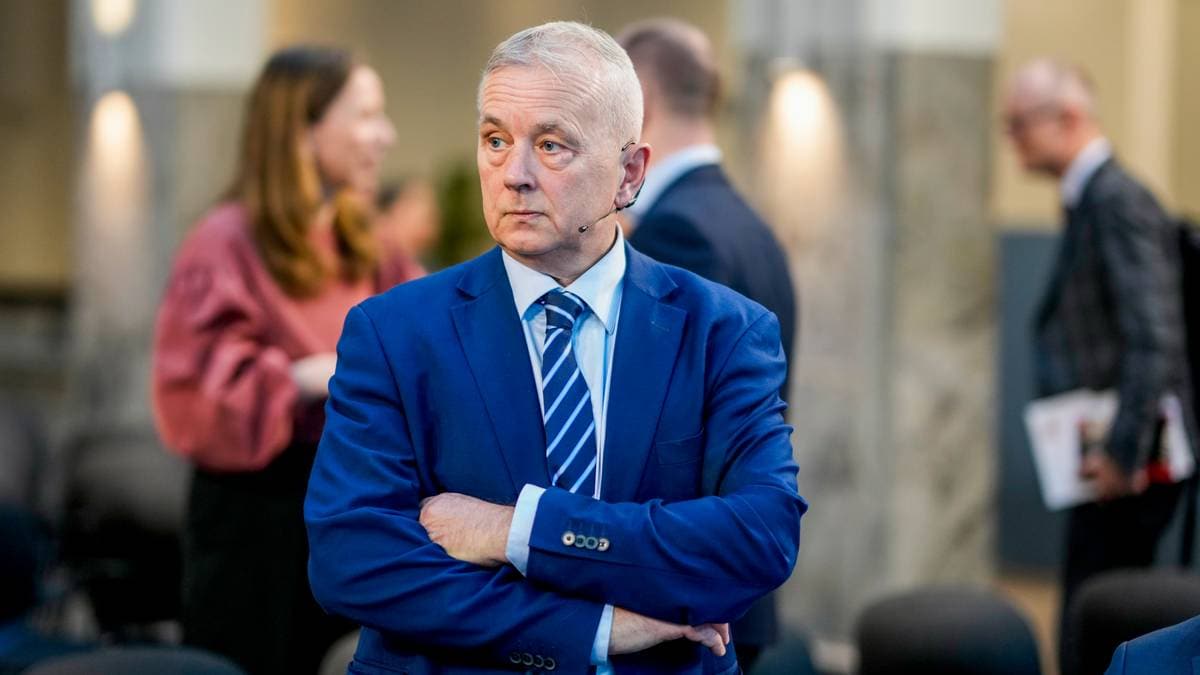
The 20 measures were presented on Thursday at 9am. – What we assume and will propose is that we must have a significant reinforcement of child welfare. This is stated by the head of the committee’s state manager and former Minister of Justice Knut Storberget. The group he has led proposes, among other things, three special child welfare institutions for children at high risk. These institutions are proposed to be located near Oslo, Trondheim and Bergen. – There is a small group of young people who need big measures. These pilots can potentially embrace twelve people, four on each. The measures The expert group proposes: Yellow West role: The Child Welfare Service will take care of the coordinator role in collaboration on children who commit repeated or serious crime. The child welfare service is strengthened in the role with increased job resources and training in cooperation management from the state manager. Red button cooperation: Establish a new regional collaboration structure for the police, the child welfare service, Bufetat/ BFE and the specialist health service in cases of acute and serious concern for children who commit repeated or serious crime. Investigate changes in the rules on confidentiality and information sharing. Expansion of Bufetat and BFE’s MST offer (multisystemic therapy). Create MST-Can (multisystemic therapy-Child Abuse and Neglect) under the auspices of Bufetat and BFE. Increased knowledge of MST and MST-Can in child welfare services. Develop multi -systemic measures that take more children who commit repeated or serious crime. Increased prevalence of violence -specific treatment for children. Offers for children who have harmful sexual behavior must be seen in context. Clearer guidelines for investigation of U15 cases. Establish the security program for offended children in all police districts. Expanded use of restorative process in U15 cases. Establishment of local fast tracks in U18 cases across the country. Financial support for mentoring schemes for children who commit repeated or serious crime. Pilotes three child welfare institutions for children at high risk. The Directorate of Prison and Probation is commissioned to prepare a common operating and professional model for the youth units. Piloters at least two low -security places for children in the youth unit west. Consider whether the deadline for imprisonment in order of custody should be able to be set to four weeks for children. Create three regional services in security psychiatry that is adapted to children. Changes in the Child Welfare Act that will help children living in an institution to get better and more individually adapted help and protection. The child’s needs should be a greater extent to whether there should be an institutional stay, the length of the stay and for what limitations and interventions can be used for the child. The changes also aim to strengthen the child’s legal security and the right to participate. Urgent measures Storberget emphasizes that it is out of the question to lower the criminal age in Norway. – Denmark has tried it without much luck, says Storberget. He says that there are a few children who commit repeated and serious crime in Norway. The report was submitted to Justice and Emergency Minister Astri Aas-Hansen (Ap), Minister of Children and Family Lene Vågslid (Ap) and Municipal and District Minister Kjersti Stenseng (Ap). Photo: Cornelius Poppe / NTB The children in question have what the committee describes as a high risk. This means that they either jeopardize their own or others’ lives and health without the institutions today being able to prevent it. – For some children, an institutional service in the child welfare or health sector will be necessary for a period of life, says Storberget. Will intervene in the children’s freedom of movement The committee believes it is urgent to create such 24 -hour services for children in Norway. – We propose that the institutions be allowed to intervene in the child’s freedom of movement, says Storberget. Visits and who they get to talk to should be determined by the Child Welfare Service and the Health Board. Committee leader Knut Storberget and Justice and Emergency Minister Astri Aas-Hansen. Photo: Cornelius Poppe / NTB They will assess the child’s own needs, according to Storberget. – You talk about locking the door on children who are extra exposed. Isn’t it like a prison for children? – No, but there may be cases where you need hedging. Then it will happen over a very short time. Shoots too hard There is not a unified group that presented the proposals on Thursday morning. Professor of forensic science Merete Havre has taken dissent. Oats, will not stand behind the majority’s proposals. – The measures proposed are, despite the title of the report, hard. Havre believes that the new rules will also apply to children who have never hurt anyone. She also responds to being used against children living in an institution because her parents are unable to take care of them. – These are children that the parents do not have, and who should have a child welfare institution as their daily care base. Most of them are law -abiding before the report was presented was Storberget guest in the news morning. Here he emphasized that the vast majority of children and young people, between 12 and 17 years in Norway, are law -abiding. But there are a few exceptions, says Storberget. The leader of the committee Knut Storberget was a guest in the news morning on Thursday. Photo: Aurora Ytreberg Meløe / news – We are set to do the great job – look at what we do with those who still commit criminal acts. Storberget is particularly concerned about the upturn for those under 15. Those who have not turned 15 are below the criminal age and therefore cannot be punished. – End with these compulsory artist Mikal Diego Rojas Bøckman, also known as Flexi Aôkan, was, like Storberget Guest in the news morning on Thursday morning. He has been open to the fact that he was a criminal as a youth. “For my own part, it was poverty that pushed me to raise my own money when I was a child,” Bøckman said. He says that when you live cramped and are not allowed to participate in leisure activities, the path to being criminal can be short. Former youth crime Mikal Diego Rojas Bøckman believes coercive funds do not work on young criminals. Photo: Aurora Ytreberg Meløe / news Bøckman says that it is not the individual youth who is the problem. – We must try to take the problem at Rota, and there is poverty, outsiders and access to society. He says you have to focus on youth before they become criminals. Bøckman is clear on what he hopes the Storberget and the expert committee will present. – End these compulsory means. It creates more distance between the young offenders and the system. Published 13.03.2025, at. 08.48 Updated 13.03.2025, at. 10.14
ttn-69