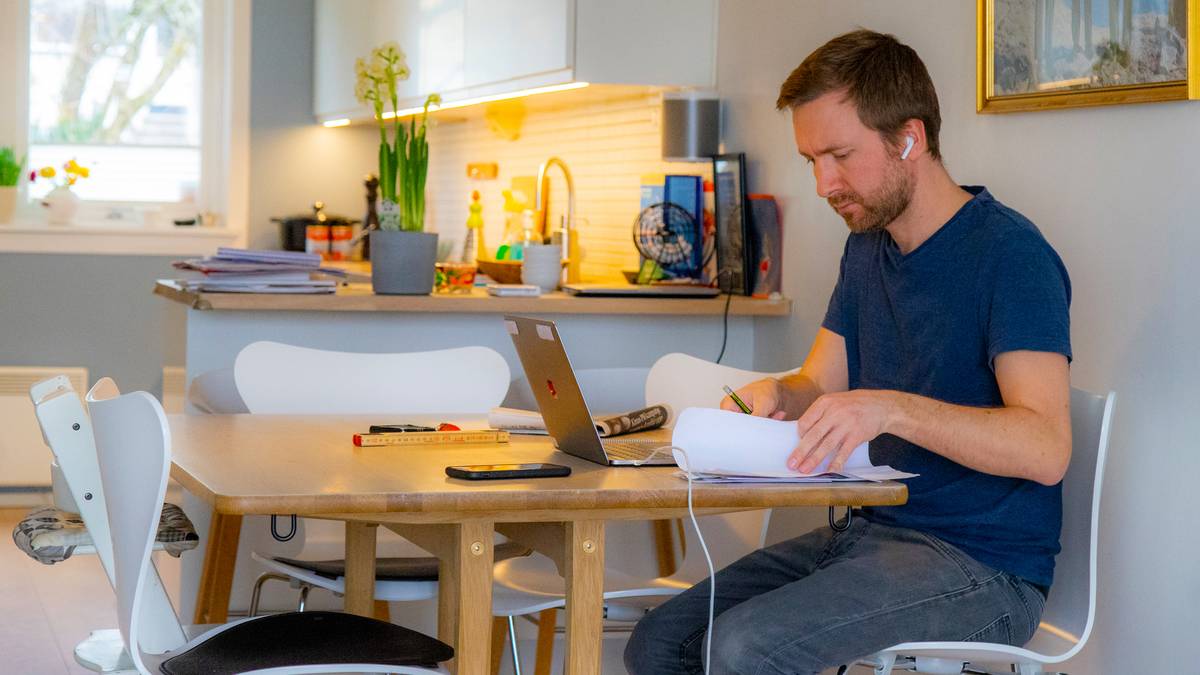
In January, a new order was signed in the White House that leaders in federal ministries in the United States should order all employees to work physically in the office five days a week. The purchase followed threats of dismissal for US state employees who oppose the order. This has triggered a domino effect where top executives in giant companies such as Amazon, JP Morgan and AT&T are following suit similar decisions. And more will probably throw themselves on this wave. It will be unwise. Research -based knowledge shows that office wakes are not good, either for the companies or their employees. Gower predictions never struck at the beginning of the pandemic, many bleak predictions came that the entire business community would kneel during the burden with the required home office for all office employees. The facet after five years is that the doomsday prophecies proved to be wrong. The community ticked further, companies survived, and a digital transformation accelerated at a pace we previously did not think was possible. People of all age groups learned how to use digital collaborative tools. This provided a boom of new hybrid working methods, where employees alternate between being at a home office and a physical office. Knowledge workers in many countries now spend an average of a quarter of working hours at home office. Despite many attempts from top executives to force people back to the offices in recent years, the level of home office use has remained strikingly stable. Comprehensive data from several solid sources – US Census Bureau, Stanford Survey of Working Arrangements and Attitudes (Swaa), Kastle Systems’ access measurements in office buildings and placer.AI’s mobility data – show that home office use has changed relatively little in recent years after the pandemic. Our own analyzes of 50 companies globally show that most of them have not changed their office policy after the pandemic. The few who have introduced several compulsory office days do not necessarily experience higher physical presence. Research supports the “hybrid model” initiative similar to the US authorities’ decision on “office vang” is often justified by claims that hybrid employees are less productive than those working full time from the office. But these claims have no support in the research. Top research published in prestigious journals, on the contrary, shows that: Hybrid workers maintain the same productivity level as full -time office workers. In some industries, they are actually more productive. Hybrid workers have a significantly lower probability of terminating their job and are more loyal to the employer. It is good for the companies. High termination rates are expensive, because new people must constantly be trained and many are not long enough to be productive in their jobs. A majority of employees are willing to take a pay cut, in some cases up to 20 percent, to retain the opportunity to work from home parts of the week. In addition to increasing loyalty to the employer, the hybrid work model has created a number of positive ripple effects. One of these is that toddler parents talk about less time squeeze and about better balance between work and family life. In our own research, we also find that employees solve their tasks more efficiently when they can influence where and when they work. In addition, reduced commuting has improved air quality in urban areas and had positive environmental effects. It should not be stabbed under a chair that home office and hybrid work presents some challenges as well. When we work from home, it is easy to work too much. We meet colleagues less often and have a greater risk of experiencing loneliness. A comprehensive study from the University of Oslo, which followed 6500 workers through the pandemic and two years later, found that the more days people worked from home, the more likely it was that they would feel lonely. Some of the companies we have studied have found a solution that appears to reduce the problem of loneliness – without the gains from hybrid work being poured out with the bathing water. These companies, which have a lot of people in the office and at the same time doing well, have based their guidelines on trust rather than control. Here, teams and departments agree on when to meet and how to spend their time together. Teams that coordinate their office days in this way report better psychological security, networking and good experiences when new employees are to be incorporated. Future -oriented working model five years after the sudden digitization of working life, it is time to recognize that hybrid work has come to stay. Not as an emergency solution, but as a more flexible, sustainable and future -oriented working model. But the success depends on how the scheme is put into life. The most effective approach appears to be a flexible, trust -based policy with coordinated presence for the members of the team, as well as an attractive office environment – rather than strict attendance requirements. When we now see what is happening in the United States, it is important that Norwegian leaders adhere to research -based knowledge of what provides effective collaboration and satisfied employees. Norway’s competitive advantage lies in the fact that we have a society with high confidence, where the employees take responsibility for the job they do. By finding a good balance between home office and physical presence, we can utilize this advantage to the fullest years to come. Send us your utterance desire to write? Feel free to contact us in news Ytring with your post. The guidelines can be found here. Published 12.03.2025, at. 15.27
ttn-69