
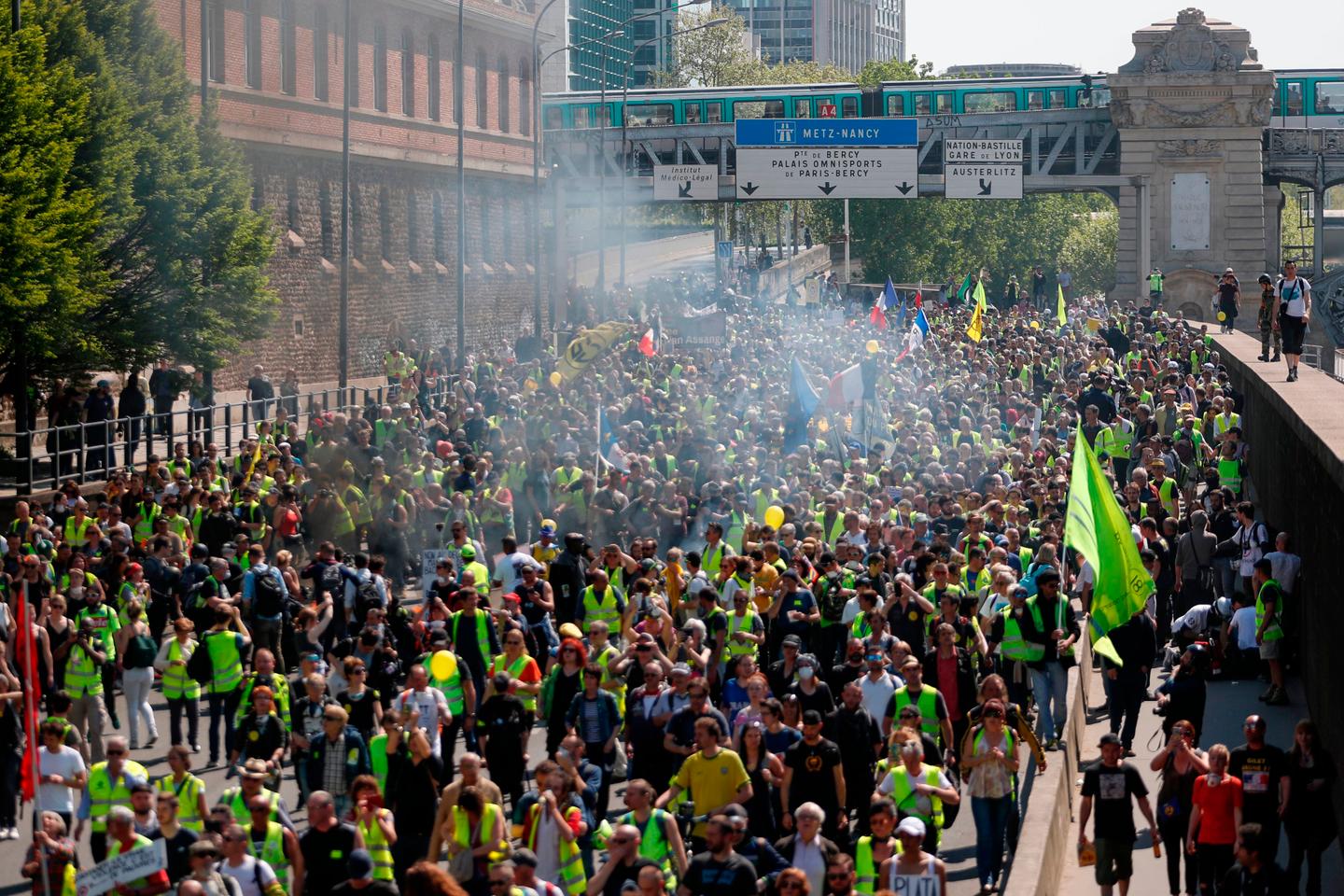
Almost six years have passed since the great national debate, this citizen consultation launched by Emmanuel Macron between January 15 and March 15, 2019, in response to the demonstrations of “yellow vests”. This democratic exercise – unprecedented in modern times – had resulted in the collection of “19,000 citizens’ notebooks” Remained in the shadows.
The National Assembly called on the government on Tuesday, March 11, to shed light on this “National Treasury”in the words of the deputy of Drôme Marie Pochon (ecologist) at the origin of a resolution, adopted unanimously, requesting a wide dissemination and a restitution of these notebooks of complaints.
“Thousands of blackened notebooks, anger, hopes, life stories, concerns and proposals from our fellow citizens”but “Notebooks which, despite the presidential promise, will never be made public”she deplored, in the tribune of the hemicycle. “We then find them in the archives, carefully kept, sometimes still in the drawers of the town halls”added the elected official.
Most of these “Grounds” Rest in the departmental archives throughout France and are hardly open only by researchers. The public, who often has access to it without knowing it, is rare.
Find techniques to anonymize contributions
This resolution notably calls the government to “Make these complaints public on a platform” Online open to everyone. To do this, the State must finalize and finance “The digitization of each book of complaints” but also “Their anonymization”.
Because when citizens have written their complaints – sometimes outside the framework of the great national debate, some “yellow vests” doing this in November 2018 – they often delivered very personal stories on paper, sometimes leaving elements likely to identify them. The law thus provides for not being able to make these archives available only fifty years after their deposit in order to protect the secrecy of privacy.
In response, the government has announced that they are committed to seeking “New technical solutions to anonymize contributions and allow [ainsi] Online access to the content of the complaints »according to the Minister of Relations with Parliament, Patrick Mignola, in the hemicycle. He notably mentioned tests to “Anonymize” And “Analyze” The contents already digitized with the use of artificial intelligence and promised to associate with its management a committee made up of parliamentarians, local elected officials and the Economic, Social and Environmental Council (EESC).
In addition, the Minister announced that a decree signed in the coming days by the government will act a derogation “To the fifty -year rule” To allow free access to the notebooks of digitized complaints and gathered in the interministerial service of the national archives, especially for researchers. This is where there is part of the writings that have not been made anonymous.
Unanimity but animated debates in the hemicycle
For mme Pouch, the Minister’s announcements seem to correspond to the call launched to “Start constructive and transparent work” for “The effective publicization of complaints”in a press release after the debate. MPs “Will remain vigilant and mobilized until the full application of this resolution”however, she said.
Newsletter
“The journal of the world”
Each weekend, the editorial team selects the articles of the week that should not be missed
Register
A rare fact in the Assembly, the resolution was voted by all the political groups – from La France Insoumise (LFI) to the National Rally (RN) via the macronists -, however, preventing animated debates. As when the RN criticized a proposal for a resolution “Ironically co -signed” By all those responsible for the crisis of “yellow vests”, in the words of the deputy of Gironde Edwige Diaz. She castigated a “Political class” Who “Improviso pyromanian firefighter” and stubbornness “Detestation of motorists” in the measures taken since 2018.
For the deputy for Val-d’Oise Arnaud Le Gall (LFI), the publication of “Notebooks can make it possible to make your true face to a revolt whose actors have been largely defamed and whose main watchwords have been hidden”. He targeted the government camp, saying that some “No doubt hope, with this publication, close the cycle opened in 2018”but claimed to see “A stage of combat” For “The dignity of yellow vests” and so that “Their demand for social, fiscal justice and democracy”.
Him like mme Pochon wanted to underline the last time that complaints had been published. It was in 1903, the year when “Jean Jaurès initiates research and publication of the complaints of the French Revolution, also before the National Assembly”according to mme Pouch. “Today, we will have the opportunity to do it in less than a century”she encouraged.