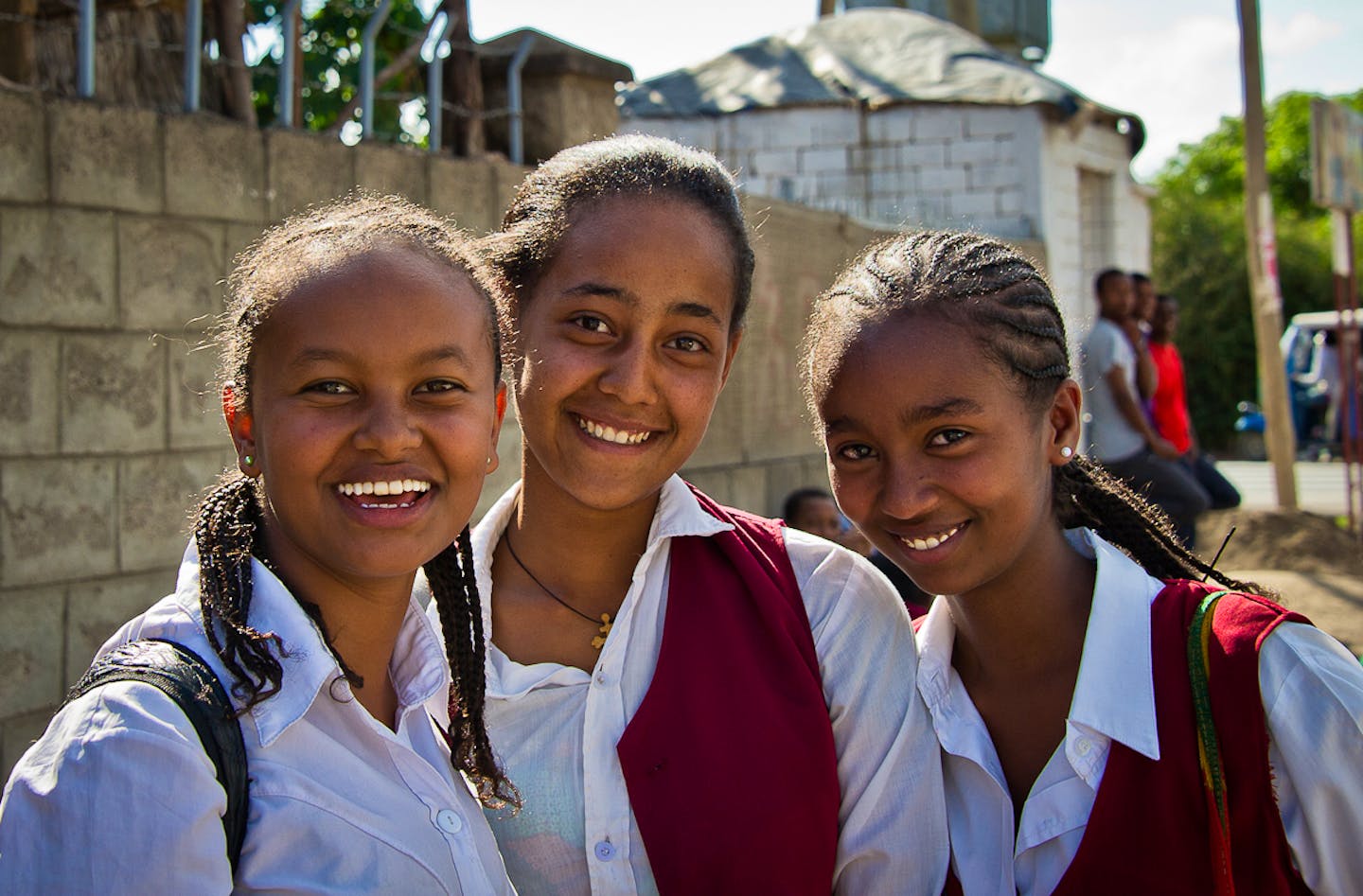
Lack of opportunities Ethiopia is one of the countries south of Sahara where progress has really been made. The proportion of teenage births has been reduced from 191 births per 1000 women in 2002 to only 72 births per 1000 women in 2017, which are the latest figures on this. This is a 62 per cent reduction in just 15 years. Although the number of teenage pregnancies has gone down, it is still a life -changing experience for young girls in Ethiopia. This is especially when pregnancy is unexpected, which is often the case. Shibru sees it among the young people he meets in Ethiopia: Young girls, exposed to incest and rape, who suddenly have to become mothers while they are still children. Older teenagers who have to quit school because of an unexpected pregnancy, often because they lacked knowledge of sex or did not have access to birth control. – There is a general attitude in many adults in the local areas that teenagers are too young to talk to them about intercourse, but that is really not the case, says Abebe Shibru. The young people become pregnant, so the need for conversations about sex is arguably necessary, he says. The conversations are some of the MSI helps to secure Ethiopia. The organization sends outreach teams to remote areas of the country to offer knowledge and birth control. They feel that in some remote areas there is a great desire for birth control, but that it is difficult to obtain. Many of the stores are either too far away or simply have nothing left, because demand is so high. Sometimes young teens, in the absence of opportunities and knowledge, can resort to insecure abortions when they become pregnant. In the worst case, it can cost them life, and Shibru has no doubt that the young teenagers are the largest customers of the black market’s uncertain abortions in Ethiopia: – More than 80 percent of those who take unsafe abortions are young people who do not think they can get help from official sources. Part of something bigger in Africa south of Sahara is normal for a girl to drop out of school if she gets pregnant. It has major consequences for the individual, but also for society. 60 per cent of the population in the region is under 20 years. Thus, the teenage pregnancies can have major consequences for the countries’ finances when a large part of the youth do not complete their education. Erica Belanger, director of state partnerships in MSI, explains that they are pleased that their offer of secure abortions and counseling about birth control is well received in Ethiopia. – We see a bigger and greater demand. Still, MSI meets resistance. Abortion is often an inflamed topic, and demonstrations in local areas can make it difficult for women to approach the clinics. And although the development is moving forward in Africa south of Sahara, the region has increasingly than twice as many teenage births as the world average. However, the falling proportion of births shows that the world is moving in the right direction.
ttn-70