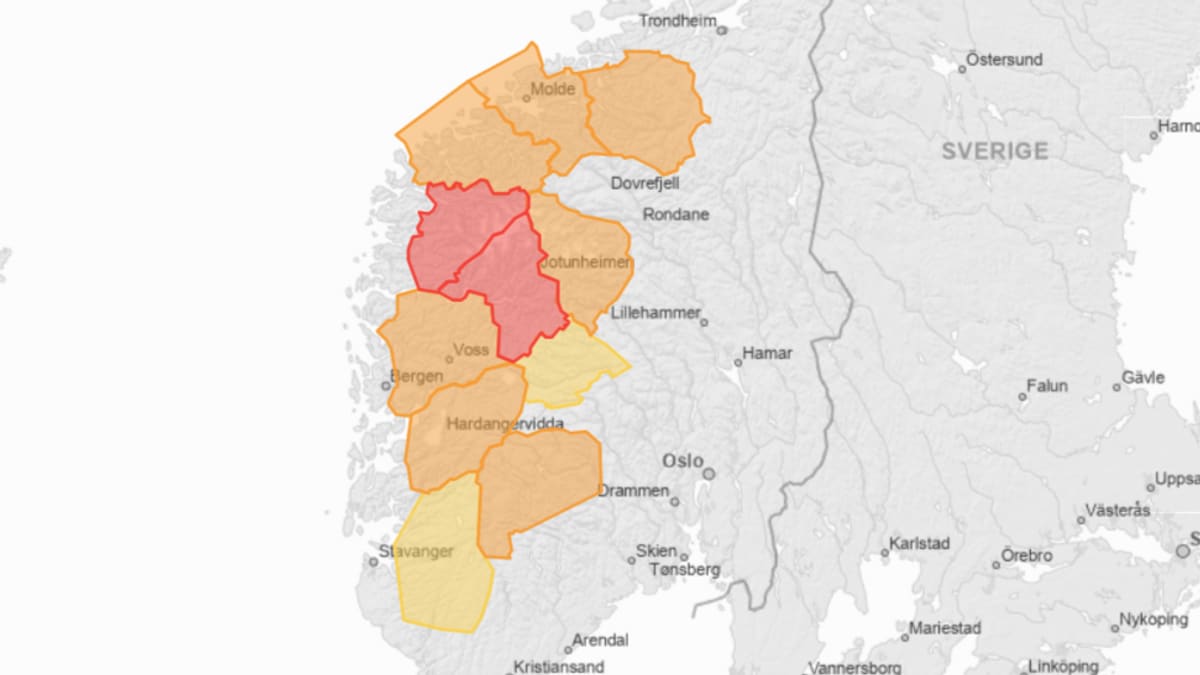
1. Read the avalanche warning for your area. Find out what the different degrees of danger and avalanche problems mean for you when traveling in avalanche terrain. Also read the text “landslide problem” for each warning. It gives more information than just the number. 2. Plan your trip at home. Plan your trip according to weather and snow conditions, and the tour group’s level of experience and knowledge. At the start of the trip, you must also assess whether local snow conditions are different from what you expected. Make a new assessment if the answer is yes. 3. Pay attention to the danger signs of avalanches that nature gives you: fresh avalanches, cracks in the snow surface, drifting from the snow cover under stress. 4. Have good traffic routines. If you have to walk in an avalanche-prone area, do it one at a time, and keep a good distance from each other. Stop or wait only in places where you cannot trigger an avalanche, and where you cannot be caught by an avalanche from above. The main rule is to avoid driving in avalanche terrain, i.e. terrain that is steeper than 30 degrees. 5. Be able to recognize avalanche-prone terrain. Where can landslides occur, and how far can landslides go? 6. Always makes well-thought-out road choices. Ask yourself the question “why can I travel here”? 7. Bring the right equipment. When driving in the vicinity of avalanche terrain, you must always have an avalanche beacon (transmitter and receiver) on your body, as well as a search stand, shovel and first aid equipment in your rucksack. Practice using the equipment before you go on a trip. Source: Red Cross
ttn-69