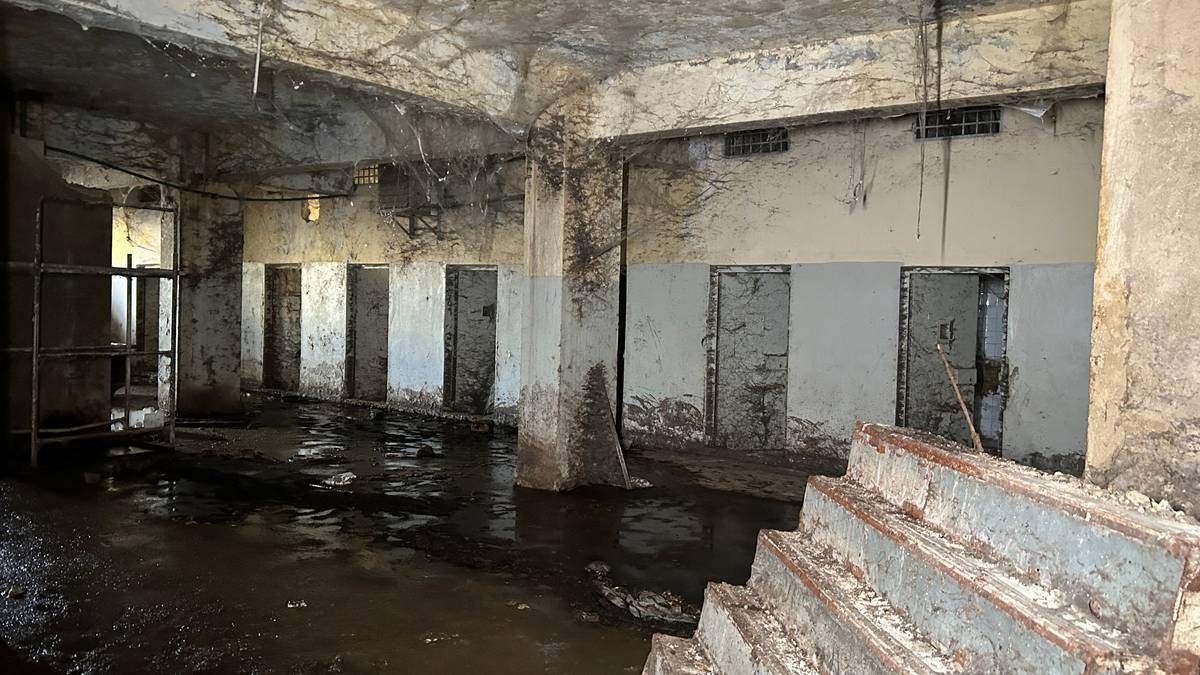
– Do you see this stick? It was used to torture the inmates. Syrian Bassam al-Ali (30) holds out a thin, small cane. – It is very hard. Even when you hit the ground, it doesn’t break. The cane was used to hit inmates in the back of the head, he says. Photo: Yama Wolasmal / news Burned with cigarettes One of the first things the Syrian rebel forces did after the Assad regime was overthrown was to liberate the Sednaya prison outside Damascus. Tens of thousands of adults and children were confined here. Countless people were raped, beaten and otherwise tortured. Thousands were brutally killed. Bassam al-Ali calls the prison “the end of the world”. Several of his relatives were kept confined here. No one has heard from them in over ten years. Now he’s back to try to find them. Or just a little more information about what happened to them. Because what are the chances of finding the relatives alive after so many years? Photo: Yama Wolasmal / news Bassam is just one of hundreds of Syrians who have been looking for relatives in prison over several days. – We were tortured as often as we were given food, says Ammar Mahmoud (32). He was locked up in prison for three months in 2012. He was then barely 20 years old. No one in the family found out where he was, he says. Behind the walls he was beaten and mistreated. The guards burned him and other inmates with cigarettes. Mahmoud’s story coincides with similar stories documented by human rights organizations in Syria. Photo: Yama Wolasmal / news – They wanted me to name family members. Regardless of whether they had done something or not, he says. Through the walls of the prison, he heard other inmates being tortured. It felt like it would never end. Now, with the Assad regime gone, Ammar has returned. Photo: Yama Wolasmal / news The first prisoners arrived at Sednaya prison in 1987. As many as 30,000 people may have been executed or tortured to death here since then. Amnesty International has documented extensive mistreatment of the inmates. The organization called the prison “the butcher’s house” in a report from 2017. Photo: Yama Wolasmal / news – We burn up After the Assad regime was overthrown by rebel groups earlier in December, thousands of inmates have been released from the prison. But countless Syrians are still missing, says Bassam al-Ali. – We heard that the regime transported people away in buses before reunification, he says. – Where did those buses go? We don’t know. – How does it feel to you? – It feels like we are burning up, says Bassam. His voice trembles. Photo: Yama Wolasmal / news Red ropes on a concrete wall news’s reporter moves through abandoned corridors, cells covered in mud, cobwebs and faeces. Words fall short when describing the atrocities committed by the Assad regime here. An unbearable stench fills the prison yard. Red ropes hang from a cold concrete wall. It was here that inmates were hanged, a man tells news. Photo: Yama Wolasmal / news Now countless people from all over Syria are looking for signs of life from friends and family members who disappeared behind the walls. Rescue crews have examined shafts, valves and the sewer in the search for hidden inmates. Several relatives have already spent almost a week here. Some will never find the ones they are looking for. Photographer Katchig Awedikian is in Syria with Yama Wolasmal, and contributed to this report.
ttn-69