
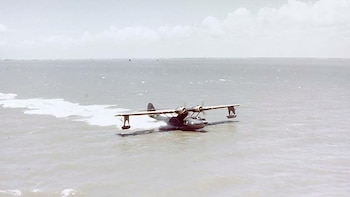
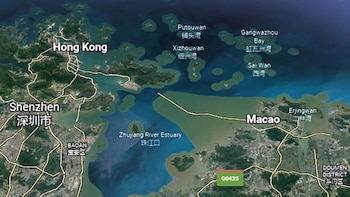
July 16, 1948 marked a significant event in aviation history. The __Miss Macao HydroAvion__ took off from the waters of __Macao__ bound for __Hong Kong__, expecting a brief 20-minute journey. However, this flight transformed into the __first documented air kidnapping__ in history, resulting in the tragic demise of nearly all on board. This event, reported by CNN, catalyzed a profound shift in security protocols for commercial aviation worldwide.
The sole survivor was __Wong Yu__, a young 24-year-old Chinese farmer. He emerged from the __South China Sea__ with a broken leg and a life jacket, while the world grappled with the shocking act of air piracy that had just transpired.
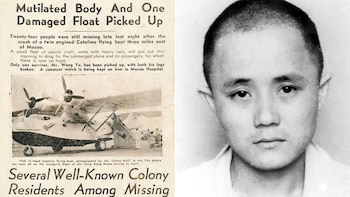
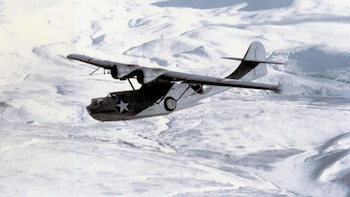
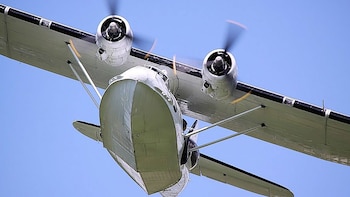
In the late 1940s, both __Macao__ and __Hong Kong__ were European colonial territories, with Macao under Portuguese rule and Hong Kong under British control. Air travel between these two locales had become a popular means of transport for affluent businessmen and tourists. They preferred the __Consolidated Model 28 Catalina__, known as Miss Macao, to traverse the __South China Sea__ in a mere 20 minutes.
As noted by CNN, these flights, often referred to as “__cigarette flights__,” were relaxed and unregulated. Passengers could purchase tickets upon boarding, and smoking was commonplace during the journey.
The __Macao air transport company__, a subsidiary of the then-nascent __Cathay Pacific__, operated two __Catalina Hydroplanes__. Due to the absence of an airport in Macao, the planes took off directly from coastal waters, making their service particularly appealing to those transporting valuable goods, such as gold, as Macao was the only open gold market in East Asia at the time.
Dan Porrat, a historian at the __Hebrew University of Jerusalem__, explained to CNN that flying during this era was quite accessible, with minimal security measures. “Getting on a plane felt like taking a bus,” he said, indicating that security was lax, and pre-flight checks were shallow.
On that fateful day, the __Miss Macao__ departed with 27 people aboard, including 24 passengers, two pilots — American __GIVE CRAMER__ and Australian __Ken McDuff__— both ex-military, and a hostess, __Delca da Costa__, a Portuguese citizen and McDuff’s partner. Among the passengers, four men, including __Wong Yu__, plotted to seize the plane and rob its occupants.
According to subsequent confessions from Wong Yu, detailed by CNN and historian __Luis Andrade de Sa__ in “Aviation in Macao: One Hundred Years of Adventures,” the kidnappers sold all their possessions to buy tickets, convinced their plan would justify the risk. Shortly after takeoff, they initiated their scheme: one of them, __Chiu Tok__, seized the cockpit and demanded control of the plane.
The resistance from the crew and several passengers thwarted their assault efforts. While one passenger grappled with a kidnapper, a gun went off. McDuff attempted to bludgeon Chiu Tok with an iron bar, but the kidnappers shot both pilots. Unfortunately, Cramer’s body fell onto the control stick, causing the hydroplane to crash into the sea. The __China Mail__, a Hong Kong newspaper, deemed the incident as “__unprecedented in the history of aviation__.”
The magazine Time described the scene as chaotic, noting the desperation of the kidnappers who appeared “__hungry__” to target the wealthy passengers. The original plot, as revealed in Wong Yu’s confession, was to divert the plane to a town in __Guangdong__, rob the passengers of their valuables, and hold them for ransom. No fatalities were initially intended.
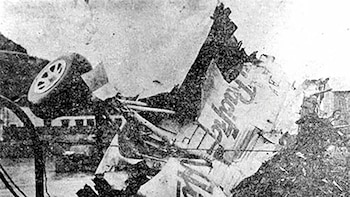
Wong Yu was rescued by a fisherman and taken to a hospital in Macao, where he initially claimed to be another passenger, asserting that the plane had exploded mid-flight. However, discrepancies in his story soon emerged, especially after he attempted to flee the hospital. Recovery efforts revealed the __Miss Macao__ wreck, riddled with bullet holes, contradicting his narrative.
Authorities, facing Wong’s deteriorating physical and mental health, resorted to unconventional methods. They stationed undercover agents in the hospital to build rapport with Wong. Ultimately, he confessed to the plot and detailed the kidnapping’s course, according to CNN.
Wong Yu’s situation became complicated due to jurisdictional issues. Portuguese officials in Macao contended that the trial should be in Hong Kong since the plane belonged to a British company. Conversely, British authorities argued that, given the kidnappers were Chinese citizens, the case fell to them. Eventually, in 1951, Wong was deported to __Continental China__, where he passed away shortly after at the age of 27, without facing charges for theft, murder, or piracy.
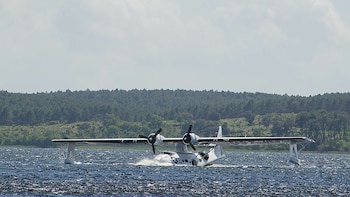
At the time, the kidnapping of __Miss Macao__ was perceived as an isolated incident. The commercial aviation sector, even in its nascent stages, feared that extensive media coverage would deter travelers. Interestingly, the term “kidnapping” had yet to be applied to such acts; the media referred to it as “__air piracy__.”
The lack of security allowed kidnappers to operate with ease. Reports indicated that they concealed weapons by attaching them to their legs with black strings and hiding ammunition in their shoe soles. The concept of screening passengers with metal detectors was still far from a reality.
Despite the gravity of the situation, the industry did not act immediately. When the U.S. established the __Federal Aviation Administration__ in 1958, it overlooked measures to prevent air kidnappings. However, as air travel expanded and societal discomfort about security grew, changes began to unfold.
Between 1968 and 1972, airlines experienced what Brendan I. Koerner termed the “__Golden era of kidnappings__.” During this period, a kidnapping was recorded every five and a half days. Some incidents mirrored the Miss Macao scenario, where hijackers took control of the plane, diverted it, robbed passengers, and demanded ransom. Others were politically motivated, like the 1968 __El Al Flight 426__, where Palestinian militants hijacked the plane and held 40 Israelis for 40 days.
The economic toll was immense. __William Landes__, an economist and Professor Emeritus at __the University of Chicago__, estimated that kidnappings during this era cost the industry $219,221 per passenger. Airlines often maintained large cash reserves for potential ransom payments.
This severity of incidents prompted the adoption of legal measures. In 1970, the __Hague United Nations Agreement__ was signed for the repression of illicit aircraft seizures, labeling the kidnappings as “__a matter of serious concern__” and highlighting the threat they posed to civil aviation security.
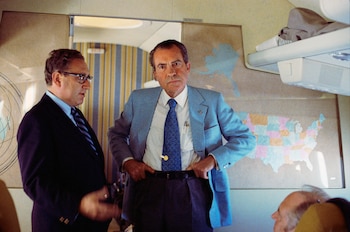
In the United States, President __Richard Nixon__ appointed Lieutenant General __Benjamin O. Davis Jr.__ as the first “anti-hijacking tsar” in the country in 1971. While the industry feared that stringent regulations might discourage travelers, mandatory metal detectors and X-ray scans of all luggage were implemented by 1973.
The events of __September 11, 2001__, further intensified security measures, fundamentally reshaping the aviation experience we have today.