

Next August will mark the 17th anniversary of the Beijing Olympics, an event that, as is often the case with such grand occasions, served as a platform for the country to project its image to the world. However, in China’s case, it also catalyzed the modernization of the nation’s infrastructure and illustrated the emergence of a new global superpower.
One of the key milestones was the launch of China’s first high-speed rail line , which spanned 120 kilometers between Beijing and Tianjin. At that time, Spain had already enjoyed high-speed travel for 16 years , starting with the AVE Madrid-Sevilla service in 1992. Japan had also introduced its Shinkansen system back in 1964, coinciding with the Tokyo Olympics, further setting the stage for high-speed rail development in the region.
Fast forward to today, China stands as the country with the most extensive high-speed rail network in the world, surpassing both Spain and Japan. It has left behind these once formidable competitors and promises to continue its incredible growth in the transportation sector.
A Maglev Train Reaching 650 km/h
As the country continues to expand its rail network, the next monumental milestone lies in achieving extreme speeds. Recent tests of China’s most advanced Maglev train showcased this ambition by reaching an astonishing 650 km/h in just seven seconds during laboratory trials. However, this impressive speed is not the only aspect catching the world’s attention.
According to reports from China, achieving this speed required only 600 meters of track. The acceleration and deceleration capabilities of the train are remarkable, especially considering that the test tunnel spans merely 1,000 meters —a short distance compared to the dozens of kilometers typically required for high-speed tests. The future promise is even more intriguing, with potential speeds aiming to hit 800 km/h .

To achieve these breakthroughs, China intends to become the indisputable leader in Maglev technology . This cutting-edge train operates through magnetic levitation , gliding just above the tracks, utilizing a system of magnets to maintain its position while allowing for frictionless movement. This unique mechanism enables Maglev trains to attain exceptionally high speeds.
The world’s fastest Maglev train currently operates between Beijing and Shanghai , reaching speeds up to 431 km/h . This particular service has posed a significant challenge to airlines, completing the 1,300-kilometer journey in a mere four hours.
For years, China and Japan have engaged in their own version of a technology race. While Japan has managed to exceed 600 km/h in experimental trials, China remains a step ahead in the race for high-speed rail supremacy.
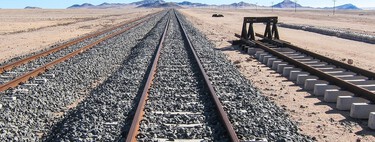
The pressing challenge now is to make trains capable of operating at such high speeds commercially viable while also providing the essential infrastructure. For instance, tunnels present significant challenges as trains traveling at high speeds create high-pressure zones that could be uncomfortable for passengers and raise safety concerns.
China seems poised to tackle these issues, demonstrating both financial will and the capacity for significant engineering projects. A prime example of this ambition is the Danyang-Kunshan Grand Bridge , an impressive structure spanning over 160 kilometers , which supports the high-speed railway between Beijing and Shanghai.
Photo | Chinese state agency
This ongoing development highlights China’s unwavering commitment to revolutionizing its transport sector. As it continues to innovate and expand its capabilities in high-speed rail technology, it is clear that China has set its sights on becoming not just a player, but a true leader in the global transportation landscape.