
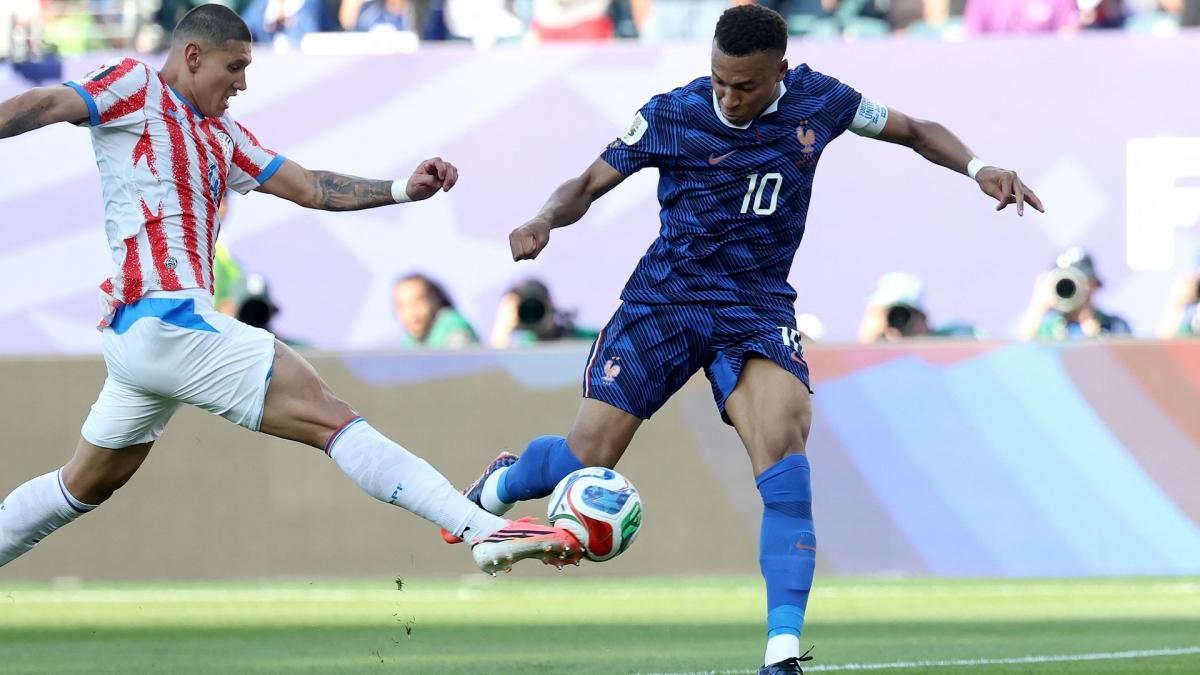
## Paraguay’s Defiant Strategy
Paraguay entered the round of 16 in the 2026 World Cup against the heavily favored French team with a clear plan: to cut off space, disrupt the game’s flow, and transform the match into a gritty battle. For nearly 90 minutes, the Paraguayans faced a French side determined to advance, but were met with a well-organized, stubborn defense. Many analysts described Paraguay’s approach as a manifestation of “anti-football”—a strategy characterized by a low defensive line, minimal offensive intent, and an outright aim to thwart their opponents’ game.
### Statistics Tell a Story
The statistics from the match were lopsided. France dominated possession with 76% and completed 568 passes compared to Paraguay’s mere 183. The shot count was a staggering 15 to 5 in favor of the French. Despite this, Paraguay’s strategy wasn’t without its merits. Just days before, they had eliminated Germany employing a similar tactic, demonstrating tactical discipline and controlling the game during decisive moments, particularly in penalties. The hope for Paraguay was to once again force an error from their opponents or take the match to extra time. However, this time, their defenses eventually cracked.
## A Detestable Strategy?
The struggle to bypass Paraguay’s defense was evident, but France remained patient. The breakthrough finally came when Kylian Mbappé netted a penalty after a lengthy VAR review, sealing Paraguay’s fate in the game. While some observers praised Paraguay for displaying tenacity with limited resources, others decried the match as tedious, filled with disruptions, and lamented the high number of infractions that tarnished the spectacle of football.
Sébastien Denis, a voice among the crowd on social media, succinctly summarized the sentiment: “Beyond the satisfaction of seeing France qualify, there is happiness in seeing Paraguay vanish from the competition as this team is detestable.”
### The Consequences of Caution
Ultimately, Paraguay’s hyper-defensive strategy proved to be their undoing. By focusing almost entirely on defense without making any meaningful attempts to attack, they paid the price for their conservativeness. Against a French team capable of decisive moments, the all-defensive option lacked the necessary punch. Thus, France’s progression was not just a reward for their ambition but also a reflection of the limitations of a tactics-first approach that prioritized negation over creation.
As the dust settled from the match, Paraguay exited the tournament with a controversial reputation—known for their disciplined but criticized style of play. While football enthusiasts celebrated the victory of the French team, Paraguay’s journey prompted discussions about the essence of the game: where should the line be drawn between defensive solidity and anti-football?
In the end, the match served as a reminder that while defense can be an effective strategy, a lack of ambition can lead to a team’s downfall. With France now set to face Morocco in the quarter-finals, the narrative of this World Cup continues to evolve, leaving Paraguay with much to ponder about their future in international football.